What we like
- 365-day money-back guarantee
- Includes pine bark extract and tamarind, two ingredients with some joint research
- Low six-bottle price ($29 per bottle)
- Liquid form for people who dislike capsules
- Brand states GMP-certified, US manufacturing
Watch out for
- Doses not disclosed; the Supplement Facts panel is not readable in any official image
- Seven of nine ingredients have no evidence for joint comfort
- Sales page says "one drop per day", which is unclear for a 60 mL monthly bottle
- Parts of the sales page appear reused from unrelated products
- Lacks the best-studied joint ingredients such as curcumin, boswellia or collagen
What is JointVive?
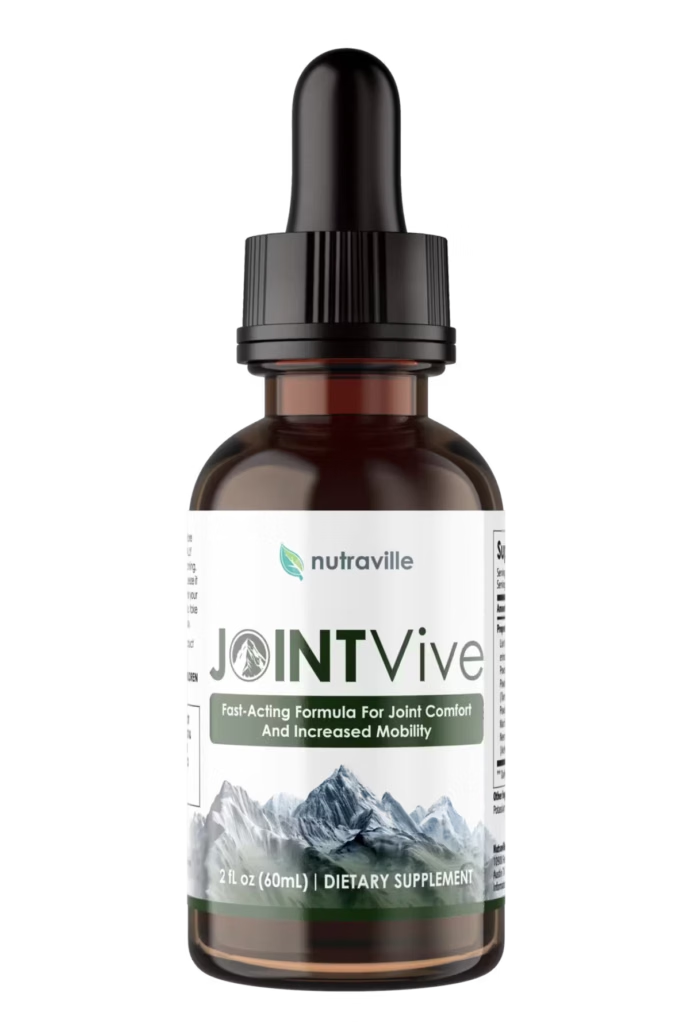
JointVive is a liquid dietary supplement from Nutraville, sold through ClickBank. It comes in a 2 fl oz (60 mL) dropper bottle labeled as a “Fast-Acting Formula For Joint Comfort And Increased Mobility”, and each bottle is sold as a one-month supply. The brand describes it as a plant-based, non-GMO and stimulant-free blend.
The sales page lists nine ingredients: pine bark extract, tamarind, chlorella, ginkgo biloba, spirulina, lion’s mane mushroom, bacopa monnieri, moringa and neem. The Supplement Facts panel is printed on the side of the bottle, but it is not legible in any image on the official site, the affiliate page or the ClickBank order page, and no amounts are given in the text. We therefore treat the doses as undisclosed.
Two things stood out when we read the official page. First, the FAQ says to take “one drop per day”, which is unusually small for a 60 mL bottle sold as a month’s supply and may be a wording error for one dropperful. Second, parts of the page appear to be reused from other products: a hidden line mentions “proper pineal gland function”, and the reference list cites studies on saw palmetto, iodine, shilajit and pomegranate, none of which are in JointVive. Neither point proves anything about the product itself, but they lower our confidence in the information on the page.
How JointVive claims to work
The marketing is relatively restrained compared with many joint offers. The brand says the formula is “based off a closely guarded formula that’s said to be able to help support joint comfort” and that it “helps potentially support joint comfort, flexibility, and overall mobility”. The bottle goes further, calling it “fast-acting”. The page does not explain a specific mechanism, and we found no clinical study of JointVive itself.
That matters because the ingredient list is not what you would expect from a joint product. Only two of the nine ingredients, pine bark extract and tamarind seed extract, have been studied for joint pain in people. Ginkgo, bacopa and lion’s mane are usually sold for memory and focus. Chlorella, spirulina and moringa are nutrient-dense “green” foods. Neem is a traditional Ayurvedic herb. The more familiar joint ingredients with the most research behind them, such as glucosamine, chondroitin, collagen, curcumin or boswellia, are not on the list.
What the ingredients actually do
Without doses, we can only describe each ingredient’s evidence in general. A liquid serving of a few milliliters split across nine ingredients may also limit how much of each one you receive.
The two joint-relevant ingredients
Pine bark extract is the strongest fit. A 2018 meta-analysis in the British Journal of Sports Medicine found that pycnogenol, a branded French maritime pine bark extract, was one of several supplements with large short-term effects on osteoarthritis pain, though the authors noted the studies were small and the evidence quality was low. A 2020 Cochrane review of pine bark extracts across ten chronic conditions, including three osteoarthritis trials, concluded that the evidence was too uncertain to confirm benefits. Most of these studies used around 100 to 150 mg per day of a standardized extract. We do not know whether JointVive uses pycnogenol or how much it contains.
Tamarind seed extract has been tested in a few industry-funded trials for knee discomfort, usually combined with turmeric. A 2022 randomized trial reported improved knee pain and function scores in people with mild to moderate knee osteoarthritis who took tamarind seed based botanical compositions. These are promising but early results, and they used specific proprietary extracts at known doses, not tamarind fruit or an unspecified amount.
Ingredients without joint evidence
Ginkgo biloba and bacopa monnieri are studied for memory and attention, and a 2026 network meta-analysis found that bacopa at 600 mg per day or more improved working memory in trials. Lion’s mane has small human studies on cognition and mood. None of the three has evidence for joint comfort or mobility.
Spirulina and chlorella are microalgae. A 2025 meta-analysis found spirulina was linked to a small drop in diastolic blood pressure, while chlorella had a neutral effect on blood pressure and blood fats. Moringa is a nutrient-rich leaf studied mainly for blood sugar and other cardiometabolic markers. Neem has a long history in Ayurveda, but most of its research is laboratory or animal work, and toxicity has been reported with concentrated neem oil. None of these has convincing human evidence for joint pain.
In short, the formula reads more like a general wellness and brain blend with a small joint component than a targeted joint supplement.
Who it may suit, and who should skip it
JointVive may suit someone who prefers a liquid over capsules, wants to try a pine bark and tamarind based product, and values a long refund window. If your main concern is morning stiffness, our page on stiff knees in the morning covers steps with stronger support, such as regular low-impact exercise, strength work for the thigh muscles and weight management. Exercise remains one of the most consistently recommended approaches for knee osteoarthritis.
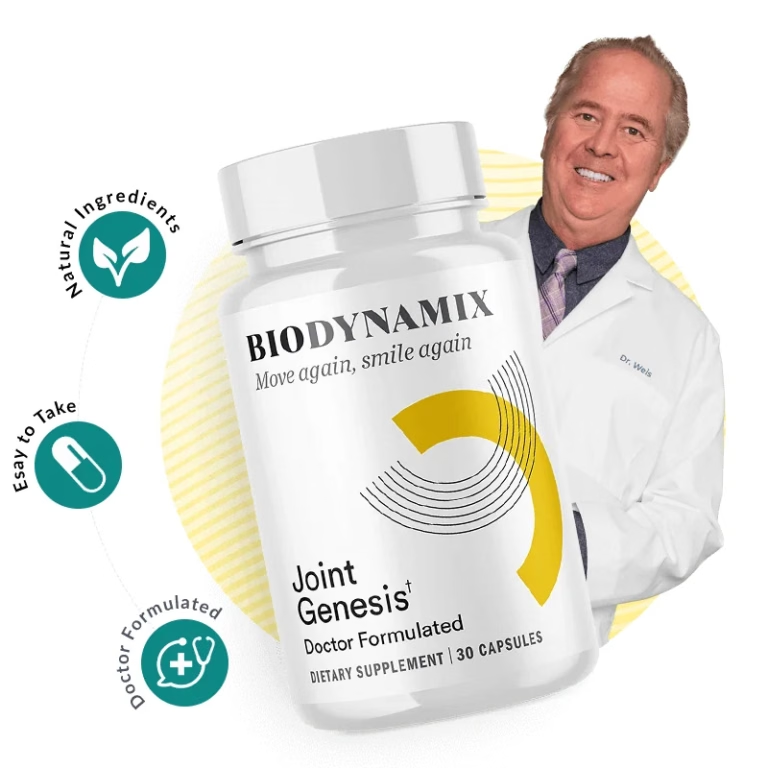
If you are comparing joint products, we have also reviewed Joint Genesis, a capsule formula. Compare the labels side by side, and favor whichever one discloses its doses and uses ingredients with joint-specific research.
Talk to your doctor before using JointVive, or skip it, if any of these apply:
- You take blood thinners, antiplatelet drugs or regular NSAIDs, or have surgery planned (ginkgo and pine bark may affect bleeding).
- You take diabetes medication, since moringa, pine bark and other ingredients may lower blood sugar.
- You take sedatives, thyroid medication or seizure medication (bacopa and ginkgo may interact).
- You have an autoimmune condition, since spirulina, chlorella and some mushrooms may stimulate immune activity.
- You are pregnant, breastfeeding or trying to conceive (neem in particular is not considered safe in pregnancy).
Joint pain with swelling, redness, warmth, fever, a recent injury, or pain that wakes you at night should be evaluated by a doctor rather than self-treated.
Price, guarantee and where to buy
At the time of our review, the official site listed one bottle for $69, three bottles for $177 ($59 per bottle) and six bottles for $174 ($29 per bottle) with free shipping. The six-bottle package was priced lower in total than the three-bottle package, which is unusual, so check the order page carefully before you buy. Prices can change.
The brand offers a 365-day money-back guarantee, one of the longest we see. The FAQ says you can return what you have not used for a refund. Read the shipping and return policy linked on the official site for the exact steps, and keep your order confirmation. Buy only through the official site; the brand says it is not sold on Amazon, eBay or other retail sites.
Our verdict
JointVive pairs two ingredients with some early evidence for joint discomfort, pine bark and tamarind seed extract, with seven ingredients that are better known for brain health or general nutrition. The label’s doses are not legible anywhere we looked, the dosing instruction on the sales page is confusing, and parts of the page appear to be borrowed from unrelated products. On the positive side, the 365-day guarantee is generous and the six-bottle price is low. We rate it 2.6 out of 5: a low-risk experiment financially, but not a formula we would expect to match better-studied joint options.
Ingredients and the evidence behind them
| Ingredient | Amount | Why it’s included | Evidence |
|---|---|---|---|
| Pine Bark Extract | Not disclosed | The most joint-relevant ingredient; standardized pine bark extract has small trials for osteoarthritis pain | Limited |
| Tamarind | Not disclosed | Tamarind seed extracts have been tested in small trials for knee discomfort, usually combined with turmeric | Preliminary |
| Chlorella | Not disclosed | Nutrient-dense microalga; no joint evidence | Limited |
| Ginkgo Biloba | Not disclosed | Usually sold for memory and circulation; no joint evidence and may increase bleeding risk with blood thinners | Limited |
| Spirulina | Not disclosed | Nutrient-dense microalga; small blood pressure effect in a meta-analysis, no joint evidence | Limited |
| Lion's Mane Mushroom | Not disclosed | Mushroom studied for cognition and mood in small trials; no joint evidence | Preliminary |
| Bacopa Monnieri | Not disclosed | Ayurvedic herb studied for memory; no joint evidence | Moderate |
| Moringa | Not disclosed | Nutrient-rich leaf studied mainly for cardiometabolic markers; no joint evidence | Limited |
| Neem | Not disclosed | Traditional Ayurvedic herb; mostly lab and animal research, with toxicity concerns for concentrated oil | Preliminary |
Each ingredient links to its own page with the research, typical doses and safety notes.
Side effects and who should avoid it
No side effect data exist for JointVive itself. Ingredient-level concerns include possible stomach upset, headache and dizziness with ginkgo and bacopa; a possible increase in bleeding risk with ginkgo and pine bark, especially alongside blood thinners or NSAIDs; possible blood sugar lowering with moringa and pine bark; digestive upset with chlorella and spirulina, which can also contain vitamin K (relevant for warfarin users) and may stimulate the immune system; and toxicity reported with concentrated neem products, which should be avoided in pregnancy and in children. Talk to your doctor before use if you take blood thinners, diabetes medication, sedatives or thyroid medication, or if you are pregnant or breastfeeding.
FAQ
Does JointVive work for knee or joint pain?
There are no published studies of JointVive itself. Two of its nine ingredients, pine bark extract and tamarind seed extract, have shown some benefit for knee discomfort in small trials, but we do not know how much of either is in the formula.
How do you take JointVive?
The official FAQ says one drop per day in the morning, directly or in a drink, after shaking the bottle. Because the bottle is 60 mL and sold as a one-month supply, this may mean one dropperful. Follow the label on your bottle.
What is in JointVive?
Pine bark extract, tamarind, chlorella, ginkgo biloba, spirulina, lion's mane mushroom, bacopa monnieri, moringa and neem. The amounts are not shown in readable form on the official site.
What is the refund policy?
The brand offers a 365-day money-back guarantee and says you can return unused product for a refund. Check the official shipping and return policy for the steps.
Is JointVive safe with blood thinners?
It may not be. Ginkgo and pine bark extract may affect bleeding, and chlorella and spirulina can contain vitamin K. Ask your doctor or pharmacist first.
Reader reviews
No reader reviews yet. If you have tried JointVive, you can be the first to share how it went.
Reader reviews are personal opinions from visitors. We do not verify purchases, and reviews are not medical advice. We publish positive and negative reviews alike; see our review guidelines.
Write a review
Sources
- Official JointVive website. Product details, label and pricing
- Dietary supplements for treating osteoarthritis: a systematic review and meta-analysis. Br J Sports Med, 2018
- Pine bark (Pinus spp.) extract for treating chronic disorders. Cochrane Database Syst Rev, 2020
- Tamarindus indica Seed Extract-Based Botanical Compositions Alleviate Knee Pain and Improve Joint Function in Mild-to-Moderate Osteoarthritis: A Randomized, Double-Blind, Placebo-Controlled Clinical Study. Evid Based Complement Alternat Med, 2022
- Comparative effects of Bacopa monnieri and Ginkgo biloba on cognitive functions: A systematic review and network meta-analysis. Phytomedicine, 2026