What we like
- 60-day money-back guarantee processed through ClickBank
- Full ingredient names are listed on the sales page
- Brand states it is made in the USA in a GMP, FDA-registered facility
- Per-bottle price drops to $49 in the six-bottle package
Watch out for
- No Supplement Facts panel or doses disclosed anywhere we could find
- No ingredient has good evidence for relieving tinnitus or improving hearing
- Bottle label claims focus and mood support, not hearing, unlike the sales copy
- Contains mucuna pruriens, a natural source of L-dopa, at an unknown dose
- Smallest purchase is two bottles ($158 plus shipping)
- Sales page uses exaggerated claims and urgency tactics
What is Quietum Plus?
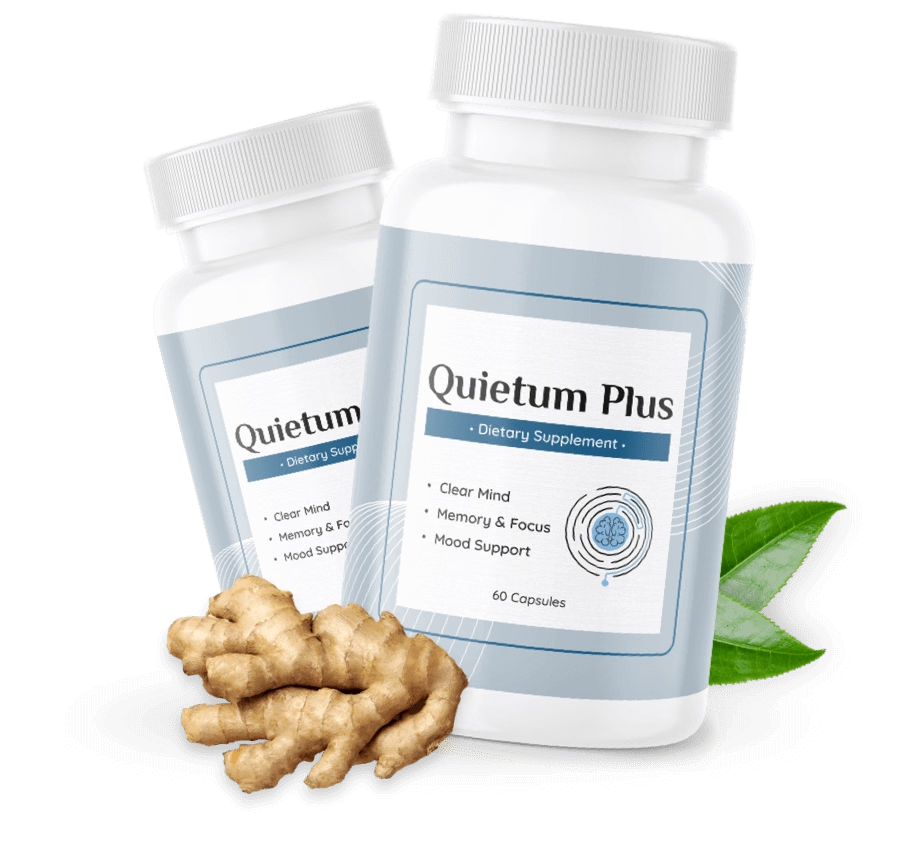
Quietum Plus is a capsule supplement sold online through ClickBank and marketed to adults who are bothered by ringing, buzzing or other noises in their ears. Each bottle holds 60 capsules, and because the smallest package the official site sells is two bottles described as a 60-day supply, a bottle appears to be designed to last about 30 days at two capsules a day.
The sales page describes “a bespoke proprietary formula” with 18 plant extracts, vitamins and amino acids. The ingredients it names include mucuna pruriens, maca root, epimedium, tribulus terrestris, dong quai, muira puama, ginger, catuaba, damiana, ashwagandha, piperine (black pepper extract), sarsaparilla root, asparagus, vitamin A, an unspecified “vitamin B”, zinc, L-tyrosine and L-arginine. What it does not show is a Supplement Facts panel. We found no amounts per capsule on the sales page, the affiliate page, the refund page or in the product photos, so we cannot tell you how much of any ingredient you would actually take.
One detail is worth noticing before you read any further. The bottle shown on the sales page is labeled for “Clear Mind”, “Memory & Focus” and “Mood Support”. The label itself does not mention ears or hearing. The hearing angle comes from the sales copy, not from the product packaging.
How Quietum Plus claims to work
The brand’s story is that ear ringing has a hidden “root cause” in the brain. According to the sales page, a “wire” that carries signals from the ear cells to the brain becomes damaged, and the formula is meant to “feed, regenerate and rebuild it”. The affiliate page goes further and tells promoters that customers get “20/20 hearing”, which is not a claim any dietary supplement can support.
It is true that tinnitus involves the brain and not only the ear. The National Institute on Deafness and Other Communication Disorders (NIDCD) explains that the exact causes are not fully understood, that tinnitus is often linked to noise exposure and age-related hearing loss, and that there is currently no cure, although sound therapy, hearing aids and behavioral therapies can help many people manage it. What the sales page does not show is any study in which Quietum Plus itself, or this combination of ingredients, was tested in people with tinnitus. The references it lists are mostly cell, animal and general brain studies of individual herbs, plus several news articles.
The page also uses pressure tactics we do not consider useful for a health decision. It suggests the “tinnitus industry” might spend millions to take the page down and recommends buying the largest package. We would set that framing aside and look at the ingredients on their own merits.
What the ingredients actually do
Because no doses are disclosed, everything below describes what is known about each ingredient in general, not what Quietum Plus delivers.
Ingredients with direct tinnitus research
Zinc is the one listed ingredient that has been tested specifically for tinnitus in controlled trials. A Cochrane review of three small trials (209 participants) found no evidence that zinc supplements improved tinnitus severity or loudness in adults, and rated the evidence as very low quality. Zinc deficiency matters for overall health, but taking zinc has not been shown to quiet ringing in the ears.
Ginkgo biloba is not in Quietum Plus, but it is the herb most often studied for tinnitus, and the results are a useful benchmark. A 2022 Cochrane review of 12 trials concluded that ginkgo may have little to no effect on tinnitus severity compared with placebo. If the most studied herb for this problem has not shown a clear benefit, herbs with no tinnitus trials at all deserve even more caution.
Herbs with research in other areas
Ashwagandha has the most human research of the group, mainly for stress and sleep, and some people with bothersome tinnitus also struggle with stress. That is a reasonable but indirect link. The NCCIH notes that ashwagandha can cause drowsiness and stomach upset, that rare cases of liver injury have been reported, and that it should be avoided in pregnancy and by people with thyroid or autoimmune conditions.
Mucuna pruriens is a legume seed that naturally contains levodopa (L-dopa), the same compound used as a Parkinson’s medication. It has been studied in Parkinson’s disease, not in hearing. That makes it a pharmacologically active ingredient whose dose matters, which is exactly what the label does not tell you.
Maca, epimedium, tribulus, catuaba, muira puama and damiana are traditionally used and mostly studied for energy, mood or sexual function. The sales page cites animal and lab studies on neuroprotection for several of them. We found no human trials connecting any of them to tinnitus or hearing.
Dong quai is described on the sales page as a “superior ear tonic”. It is a traditional Chinese herb mostly used for menstrual and menopausal complaints, and it may increase bleeding risk with blood thinners. Ginger has reasonable evidence for nausea, not for hearing. Sarsaparilla and asparagus extract have only lab, animal and traditional-use data.
Amino acids and vitamins
L-tyrosine is a precursor of dopamine and norepinephrine, and a 2015 review found it may help cognitive performance during short, stressful or demanding tasks. L-arginine is a precursor of nitric oxide, which is involved in blood vessel function. Neither has been shown to affect tinnitus. Vitamin A is an essential nutrient, but most adults in the US get enough from food, and the sales page does not say how much is included. Piperine is usually added to increase absorption of other ingredients, which can also affect how some medications are absorbed.
Taken together, this reads more like a general mood, energy and libido blend than a hearing formula. That matches the bottle’s own “Clear Mind” and “Mood Support” wording.
Who it may suit, and who should skip it
Quietum Plus may appeal to someone who wants to try a broad herbal blend, understands that the evidence for tinnitus relief is essentially absent, and is comfortable taking a proprietary formula without knowing the doses. If stress and poor sleep make your tinnitus feel worse, our topic page on ringing in your ears at night covers approaches with better support, such as sound enrichment and cognitive behavioral therapy.
We would suggest skipping it, or talking to your doctor first, if any of these apply:
- You take levodopa or carbidopa, MAO inhibitors, antidepressants or antipsychotic medicines, because mucuna contains L-dopa.
- You take blood thinners or antiplatelet drugs (dong quai and ginger may add to bleeding risk).
- You take diabetes or blood pressure medication, sedatives, or thyroid medication (ashwagandha may interact).
- You are pregnant, breastfeeding or trying to conceive.
- You have liver disease, an autoimmune condition, or a hormone-sensitive condition.
Most importantly, new tinnitus in one ear, tinnitus that pulses with your heartbeat, sudden hearing loss, or ringing with dizziness should be checked by a doctor or audiologist promptly. A supplement should never delay that visit.
If you are comparing ear supplements, we have also reviewed Audifort. Whichever you look at, check whether the brand publishes a full Supplement Facts label with amounts per serving. Quietum Plus does not, which puts it at a disadvantage against any product that does.
Price, guarantee and where to buy
At the time of our review, the official site did not offer a single bottle. The packages were two bottles for $158 plus $9.99 shipping ($79 per bottle), three bottles for $207 ($69 per bottle) and six bottles for $294 ($49 per bottle), with free US shipping on the larger packages. Bonus e-books are bundled with the six-bottle order. Prices can change, so confirm them on the official order page.
Orders are processed by ClickBank and covered by a 60-day money-back guarantee. The refund page says the 60 days start on the delivery date, that you need to email support with “Refund Request” in the subject line, and that all bottles must be returned, empty or not. Keep your tracking information and packing slip. Buy only from the official site, since the brand says it does not authorize sales on Amazon or other marketplaces.
Our verdict
Quietum Plus is marketed as an answer to ear ringing, but the formula is a broad blend of mood, energy and libido herbs whose bottle label talks about focus and mood, not hearing. None of its ingredients has good evidence for tinnitus, the one ingredient tested directly (zinc) did not show a benefit in a Cochrane review, and the brand does not disclose any doses. The 60-day guarantee lowers the financial risk, but the two-bottle minimum means you spend at least $158 to try it. We rate it 2.4 out of 5. For most people with persistent tinnitus, a hearing evaluation and well-established management strategies are a better first step.
Ingredients and the evidence behind them
| Ingredient | Amount | Why it’s included | Evidence |
|---|---|---|---|
| Mucuna Pruriens | Not disclosed (proprietary blend) | Listed first on the sales page, which says it may calm the nervous system and support neuron repair | Preliminary |
| Maca | Not disclosed | Marketed to support calm and neuron repair; mostly studied for energy, mood and sexual function | Limited |
| Epimedium | Not disclosed | Marketed for neuroinflammation and mood; traditionally used for libido | Preliminary |
| Tribulus Terrestris | Not disclosed | Marketed as an antioxidant and mood ingredient; no hearing research | Limited |
| Dong Quai | Not disclosed | Called an "ear tonic" by the brand; traditionally used for women's health, with no hearing trials | Preliminary |
| Muira Puama | Not disclosed | Marketed as an antioxidant for nerve renewal; studied mostly in animals | Preliminary |
| Ginger | Not disclosed | Marketed as an antioxidant; best evidence is for nausea, not hearing | Limited |
| Ashwagandha | Not disclosed | Adaptogen included for stress and mental alertness | Moderate |
| Sarsaparilla Root | Not disclosed (proprietary blend) | The brand says it may help "detoxify" and protect nerve tissue; this is based on lab and animal studies of related species | Preliminary |
| L-Tyrosine | Not disclosed (proprietary blend) | Included for mood; a precursor of dopamine and norepinephrine | Limited |
| Zinc | Not disclosed | Marketed for auditory acuity; the only listed ingredient tested for tinnitus, without a demonstrated benefit | Limited |
| Vitamin A | Not disclosed | Essential nutrient marketed for hearing and neuronal health; no tinnitus evidence | Limited |
Each ingredient links to its own page with the research, typical doses and safety notes.
Side effects and who should avoid it
Because no doses are disclosed, side effect risk is hard to estimate. Individual ingredients have known issues: ashwagandha can cause drowsiness and stomach upset and has rare reports of liver injury; mucuna pruriens contains L-dopa and may cause nausea, headache or interact with Parkinson’s drugs, MAO inhibitors and some psychiatric medicines; dong quai and ginger may add to bleeding risk with blood thinners; tribulus, maca and epimedium may have hormonal effects; piperine can change how some drugs are absorbed. People who take blood thinners, diabetes or blood pressure medicine, sedatives or thyroid medicine, and anyone pregnant or breastfeeding, should talk to a doctor before using it.
FAQ
Does Quietum Plus cure tinnitus?
No supplement has been shown to cure tinnitus, and the NIDCD states there is currently no cure. We found no published trial of Quietum Plus itself, and the one ingredient tested directly for tinnitus, zinc, did not show a benefit in a Cochrane review.
What is in Quietum Plus and how much?
The sales page names 18 ingredients, including mucuna pruriens, maca, epimedium, tribulus, dong quai, muira puama, ginger, catuaba, damiana, ashwagandha, piperine, sarsaparilla, asparagus, vitamin A, a B vitamin, zinc, L-tyrosine and L-arginine. It does not publish the amounts.
How do you take Quietum Plus?
The sales page does not give directions. A bottle has 60 capsules and is sold as a 30-day supply, which suggests two capsules a day. Follow the bottle label.
Can I buy just one bottle?
At the time of our review, the smallest package on the official site was two bottles for $158 plus $9.99 shipping.
What is the refund policy?
The brand offers a 60-day money-back guarantee starting from delivery. You email support with a refund request and return all bottles, opened or not.
Is Quietum Plus safe with my medications?
It may not be. Mucuna pruriens contains L-dopa, and other ingredients may interact with blood thinners, diabetes, blood pressure, thyroid and psychiatric medications. Show the ingredient list to your doctor or pharmacist before taking it.
Reader reviews
No reader reviews yet. If you have tried Quietum Plus, you can be the first to share how it went.
Reader reviews are personal opinions from visitors. We do not verify purchases, and reviews are not medical advice. We publish positive and negative reviews alike; see our review guidelines.
Write a review
Sources
- Official Quietum Plus website. Product details, label and pricing
- Zinc supplementation for tinnitus. Cochrane Database Syst Rev, 2016
- Ginkgo biloba for tinnitus. Cochrane Database Syst Rev, 2022
- Mucuna pruriens in Parkinson's disease: a double blind clinical and pharmacological study. J Neurol Neurosurg Psychiatry, 2004
- Effect of tyrosine supplementation on clinical and healthy populations under stress or cognitive demands–A review. J Psychiatr Res, 2015