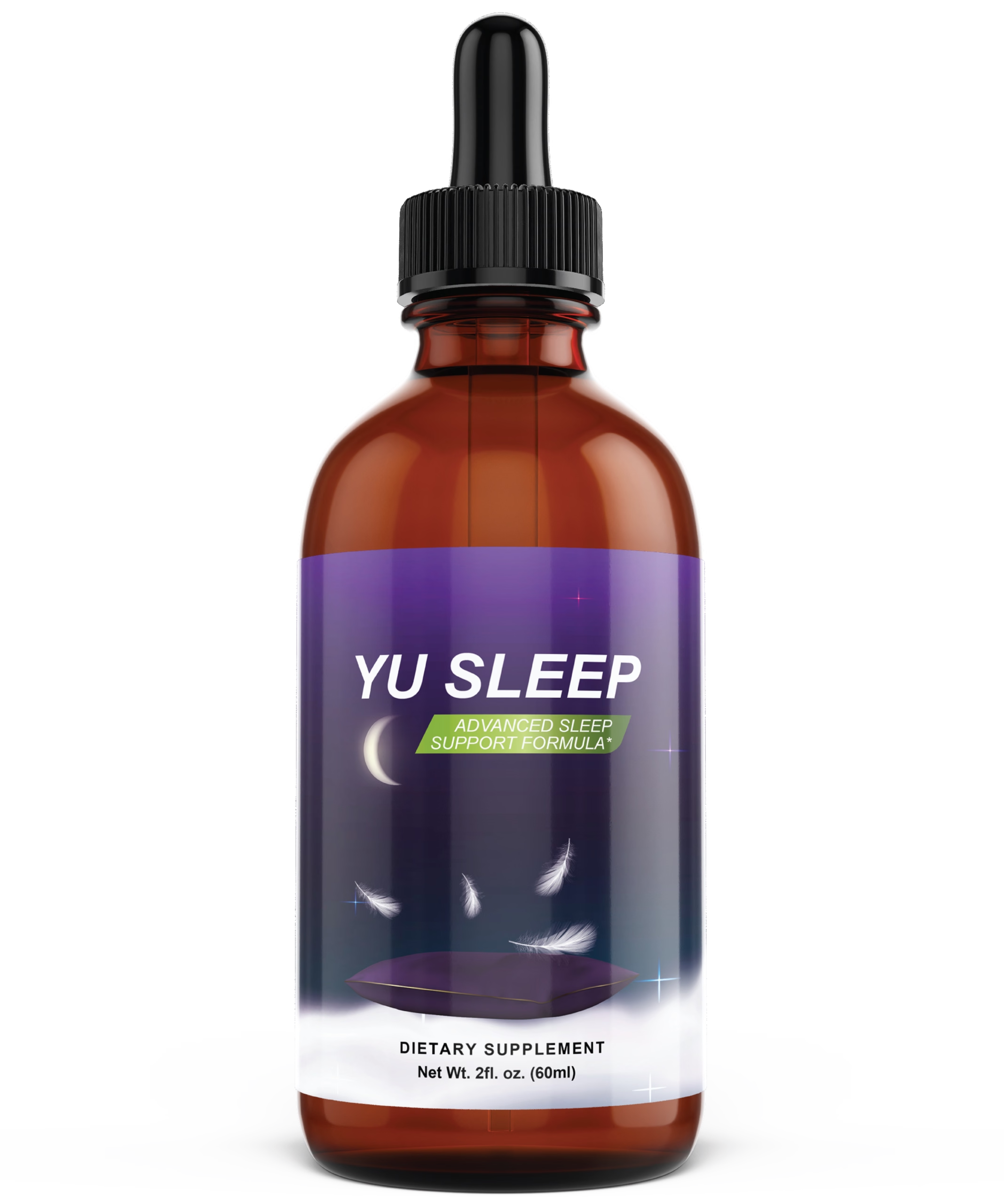
What we like
- Low melatonin dose (0.9 mg), less likely to cause next-day grogginess than high-dose products
- Includes ingredients with some sleep research, such as melatonin, magnesium and L-theanine
- Liquid format for people who dislike capsules
- One-time payment with no autoship, according to the vendor
- 60-day refund window
Watch out for
- Only the melatonin dose is disclosed; no Supplement Facts panel on the sales page
- Bottle images show the label text "Advanced Nerve Support Formula"
- Marketing claims (permanent fix, stronger immunity, weight changes) are not supported by research
- Refunds are about 85% of the price and require returning the product at your own cost
- No single-bottle option; minimum purchase is $138 plus shipping
- 5-HTP can interact with antidepressants and other serotonin-affecting drugs
What is Yu Sleep?
Yu Sleep is a liquid sleep supplement sold through ClickBank in 2 fl oz (60 mL) dropper bottles. The sales page describes it as a “nano-enhanced” formula with ten ingredients: tart cherry extract, 5-HTP, vitamin B6, vitamin B2 (riboflavin), magnesium glycinate, apigenin, lemon balm extract, L-theanine, melatonin and GABA. The suggested use is two droppers about 30 minutes before bed.
The vendor’s contact page says the website belongs to Quantum Wealth LLC, a company registered in Ras Al Khaimah, United Arab Emirates, and states that its labs and warehouse are in the US. Returns go to an address in Aurora, Colorado. The sales page credits the formula’s thinking to a “Dr. Collins,” but it gives no full name, credentials or affiliation that we could check.
One detail is worth flagging early. In the bottle images on the sales page, the label under the Yu Sleep name reads “Advanced Nerve Support Formula,” which does not match a sleep product. That may be a recycled label design, but it is the kind of inconsistency that makes us want to see the actual Supplement Facts panel before buying. We could not find that panel on the sales page.
How Yu Sleep claims to work
The brand’s central idea is that modern life breaks down your “sleep pressure system,” the build-up of the brain chemical adenosine that makes you feel sleepy at night. The FAQ says Yu Sleep “resets” this system by supporting adenosine build-up, optimizing natural melatonin release and calming the nervous system.
The marketing goes well beyond a typical sleep aid. The brand says most people sleep better within three to seven days, that the 3 a.m. wake-ups can stop, and that three to six months of use produces a “full sleep system reset” with results that continue after you stop. It also mentions stronger immunity, a “youthful glow” and weight “normalizing.” That is why it is only sold in packages of two months or more.
None of these outcomes has been tested for Yu Sleep itself. We found no published trial of the finished product, and the brand’s list of references covers individual ingredients, some studied in very different settings (for example, 5-HTP in Parkinson’s disease and in children with sleep terrors). Claims of a permanent fix or improved immunity from a sleep supplement are not supported by the research we reviewed. The page also presents dramatic customer stories, which are not evidence of typical results, as the site’s own disclaimer acknowledges.
What the ingredients actually do
The biggest limitation is that only one dose is disclosed. The sales page says each serving has 0.9 mg of melatonin. The amounts of the other nine ingredients are not shown, so we cannot compare them with the doses used in studies.
Melatonin (0.9 mg)
Melatonin is the best-studied ingredient here. A 2013 meta-analysis of 19 trials found it shortened the time to fall asleep by about 7 minutes and added about 8 minutes of total sleep compared with placebo (PLoS One). Those are modest effects. The American Academy of Sleep Medicine suggests clinicians not use melatonin to treat chronic insomnia, a weak recommendation based on limited evidence (AASM, 2017). A dose under 1 mg is on the lower end of what is sold, which may mean less next-day grogginess, but melatonin is mainly a timing signal and is less suited to the middle-of-the-night waking that the brand focuses on.
Magnesium glycinate
A review of three small trials in older adults found magnesium shortened time to fall asleep by about 17 minutes, but the evidence was rated low to very low quality (BMC Complement Med Ther, 2021). Without a listed amount, we cannot tell whether Yu Sleep supplies a meaningful dose. Liquid supplements usually hold only small amounts of minerals per dropper.
L-theanine, lemon balm and GABA
These target the “racing mind.” A 2025 meta-analysis linked L-theanine to small improvements in self-reported sleep quality, mostly from studies that combined it with other ingredients (Sleep Med Rev). Lemon balm has small trials suggesting it may ease anxiety symptoms, with high variability between studies (Phytother Res, 2021). For oral GABA, a systematic review described the evidence for sleep as very limited (Front Neurosci, 2020). The brand’s claim that lemon balm lowers cortisol so “you’ll STOP waking up at 3 AM” goes beyond what these studies show.
5-HTP, tart cherry and apigenin
5-HTP is a serotonin precursor. One small 12-week trial in 30 older adults found improvements in some sleep measures among poor sleepers using 100 mg a day (Clin Nutr, 2024), and NCCIH describes the data on insomnia as very limited. Tart cherry juice showed modest benefits in small trials that used juice or concentrate, not an extract of unknown strength (J Med Food, 2010). Apigenin is a flavonoid found in chamomile. Human data come mostly from chamomile products, and the one chamomile trial in chronic insomnia found no clear benefit on sleep diaries (BMC Complement Altern Med, 2011).
Vitamins B6 and B2
Both are essential nutrients, and B6 is involved in making serotonin and melatonin. Most US adults get enough from food, and we found no good evidence that extra B6 or B2 improves sleep in people who are not deficient.
Overall, the ingredient list is a reasonable mix of the usual sleep-support compounds. The problem is that, apart from melatonin, we have no way to judge whether the doses match the research.
Who it may suit, and who should skip it
Yu Sleep may appeal to adults with occasional trouble sleeping who prefer a liquid and want a low dose of melatonin combined with calming botanicals. If that describes you, try good sleep habits first and see our guide to waking up at 3 a.m. and not being able to fall back asleep. For ongoing insomnia, cognitive behavioral therapy for insomnia (CBT-I) is the recommended first treatment (American College of Physicians).
Skip it, or talk to your doctor first, if you:
- Take an antidepressant (SSRI, SNRI, MAOI), triptan or other drug that affects serotonin, because 5-HTP adds to serotonin activity.
- Take sedatives, sleeping pills, benzodiazepines or drink alcohol in the evening.
- Take a blood thinner or have epilepsy, groups NCCIH says should use melatonin under medical supervision.
- Are pregnant or breastfeeding, or are buying for a child or teen.
- Snore loudly, stop breathing or gasp during sleep, or feel very sleepy in the day. These can be signs of sleep apnea, which a supplement will not address.
It is also a poor fit for anyone who wants to know exactly what they are taking, since nine of the ten doses are undisclosed.
Price, guarantee and where to buy
Yu Sleep is sold through its official website, with ClickBank processing orders. There is no single-bottle option. At the time of our review, a two-month supply cost $138 ($69 per bottle) plus shipping, three months cost $177 ($59 per bottle) and six months cost $294 ($49 per bottle). The vendor says orders are one-time payments.
The sales page advertises a 60-day money-back guarantee with “no questions asked.” The refund policy page adds conditions you should know about: you must ship the product back at your own cost, shipping and handling are not refunded, and refunds are “issued at around 85%” of the purchase price. The policy also says a customer who has received one refund is not eligible for a refund on any later order. Bonuses include e-books and audio sleep stories.
Our verdict
Yu Sleep combines ingredients that have been studied for sleep, and its 0.9 mg melatonin dose is sensible. But the evidence for most of these ingredients is limited, only one dose is disclosed, the product images show a label for a “nerve support” formula, and the marketing promises far more than the research supports, including a permanent reset of your sleep. The real-world refund is also less generous than the headline guarantee suggests. We rate it 2.5 out of 5. If you want to try a supplement, a single-ingredient, clearly labeled product is easier to evaluate, and persistent sleep problems deserve a conversation with your doctor.
Ingredients and the evidence behind them
| Ingredient | Amount | Why it’s included | Evidence |
|---|---|---|---|
| Melatonin | 0.9 mg per serving (2 droppers), per the sales page | Main sleep-timing signal; the only ingredient with a disclosed dose | Moderate |
| 5-HTP | Not disclosed | Serotonin precursor included for relaxation and mood; dose not disclosed | Limited |
| GABA | Not disclosed | Calming neurotransmitter included to quiet racing thoughts; dose not disclosed | Limited |
| Tart Cherry | Not disclosed | Natural source of melatonin and polyphenols; dose and extract strength not disclosed | Limited |
| Apigenin | Not disclosed | Flavonoid included for relaxation; dose not disclosed | Preliminary |
| Vitamin B6 | Not disclosed | Cofactor for making serotonin and melatonin; dose not disclosed | Limited |
| Vitamin B2 (Riboflavin) | Not disclosed | B vitamin included for energy metabolism and to support B6 activity; dose not disclosed | Preliminary |
| Magnesium (glycinate) | Not disclosed | Mineral included for relaxation and sleep onset; dose not disclosed | Limited |
| Lemon Balm Extract | Not disclosed | Calming herb included for stress and nighttime wakefulness; dose not disclosed | Limited |
| L-Theanine | Not disclosed | Tea amino acid included for relaxation and racing thoughts; dose not disclosed | Limited |
Each ingredient links to its own page with the research, typical doses and safety notes.
Side effects and who should avoid it
No side-effect data exist for Yu Sleep itself, so expectations are based on its ingredients. Melatonin can cause headache, dizziness, nausea and daytime drowsiness, and NCCIH notes it may stay active longer in older adults. 5-HTP can cause stomach upset and, combined with antidepressants, triptans or other serotonin-affecting drugs, may contribute to serotonin toxicity. Magnesium can loosen stools. Apigenin comes from chamomile, which can trigger allergic reactions in people sensitive to ragweed and related plants. Combining this product with sedatives, sleep medicines or alcohol may increase drowsiness. People taking blood thinners, diabetes medicines, anti-seizure drugs or blood pressure medicines, and anyone pregnant or breastfeeding, should talk to a doctor first. Do not drive or operate machinery if you feel drowsy, and keep it away from children.
FAQ
Does Yu Sleep contain melatonin?
Yes. The sales page says each serving of two droppers contains 0.9 mg of melatonin. That is a lower dose than many over-the-counter products. The amounts of the other nine ingredients are not disclosed.
Will Yu Sleep stop 3 a.m. wake-ups?
The brand says so, but there is no published study of Yu Sleep. Melatonin, its best-studied ingredient, mainly helps with falling asleep, and the effects in trials are modest. Night waking has many causes, including stress, alcohol, nighttime urination and sleep apnea, that are worth discussing with a doctor.
Is the 60-day guarantee a full refund?
Not according to the refund policy page. You must return the product at your own cost, shipping and handling are not refunded, and refunds are issued at around 85% of the purchase price. Customers who already received a refund are not eligible for a second one.
Can I take Yu Sleep with an antidepressant?
Talk to your doctor first. Yu Sleep contains 5-HTP, which raises serotonin activity. Combining it with SSRIs, SNRIs, MAOIs, triptans or similar drugs may raise the risk of serotonin toxicity.
Where is Yu Sleep made?
The sales page does not name a manufacturer or facility. The vendor's contact page says its labs and warehouse are in the US and that the company is registered in the United Arab Emirates. No certifications such as GMP are claimed on the sales page.
Sources
- Official Yu Sleep website. Product details, label and pricing
- Meta-analysis: melatonin for the treatment of primary sleep disorders. PLoS One, 2013
- Oral magnesium supplementation for insomnia in older adults: a Systematic Review & Meta-Analysis. BMC Complement Med Ther, 2021
- The effects of L-theanine consumption on sleep outcomes: A systematic review and meta-analysis. Sleep Med Rev, 2025
- The effects of lemon balm (Melissa officinalis L.) on depression and anxiety in clinical trials: A systematic review and meta-analysis. Phytother Res, 2021