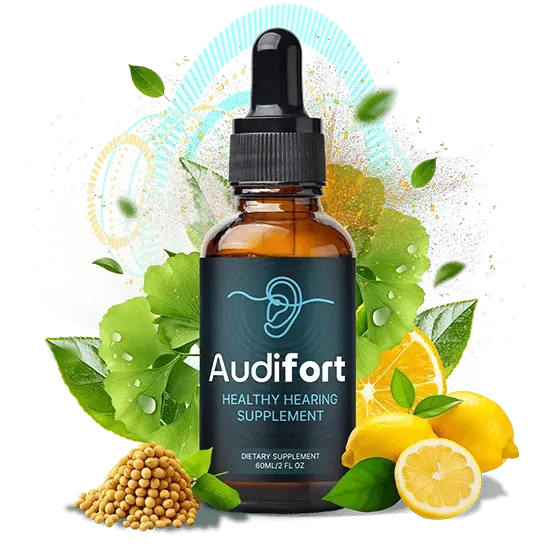
What we like
- Full list of ingredient names on the label
- 90-day money-back guarantee on every package
- Liquid dropper may suit people who dislike capsules
- Label states US manufacturing in an FDA-registered facility
Watch out for
- No ingredient has good human evidence for tinnitus or hearing loss
- 200 mg proprietary blend of about 22 ingredients hides individual doses
- Formula resembles weight-loss and blood sugar drops more than a hearing product
- Contains caffeine sources, licorice glycyrrhizinate and amino acids that can interact with medicines
- No single-bottle option; the cheapest order is $158 plus shipping
- Refunds require returning the bottles and exclude shipping and handling fees
What is Audifort?
Audifort is a liquid dietary supplement sold online as a hearing support formula. It comes in a 1 fl oz (30 ml) dropper bottle, and the Supplement Facts panel lists a 1 ml serving with 30 servings per container, so one bottle lasts about a month at one dropper a day. The label says the product is distributed by audifort.com from a Miami, Florida address, is “Made in the USA with globally sourced ingredients,” and was manufactured in an FDA-registered facility. The sales page credits a creator named Andrew Ross, and the copyright line reads Audifort Research.
The marketing leans on ringing ears, the fear of needing a hearing aid, “mental fog” and memory. The FAQ says that once your body adapts, “you will notice less noise and better ear health.” We want to be clear from the start: tinnitus and hearing loss are medical conditions, and no dietary supplement, Audifort included, has been shown to treat them. We analyzed the label, the ingredient list and the published research. We did not test the product on people.
How Audifort claims to work
The brand says each bottle contains “over 20 carefully-selected ingredients that support healthy hearing” and highlights six of them: maca root (“boosts your energy”), grape seed (“antioxidants protect the ear”), green tea (“improves blood flow to the ears”), Capsicum annuum (“supports a healthy inflammatory response”), Gymnema sylvestre (“supports hearing”) and GABA (“supports relaxation and relieves anxiety”). The page adds that the formula “works to shield your ears” with research-backed ingredients “combined in the precise ratios required to support healthy hearing.”
There are two problems with that framing. First, the label does not show any ratios. Apart from chromium (0.7 mcg, about 2% of the Daily Value), every ingredient sits inside a 200 mg proprietary blend of roughly 22 components (Audifort label). Split evenly, that would be about 9 mg of each per serving; the real split is unknown. Second, the reference list on the sales page includes a rat study, a paper on inner ear cell biology, a review of B vitamins (Audifort contains no B vitamins), a study of plants used for digestive complaints and even a spiritual book. None of these references tests Audifort or this blend.

The full blend reads like many of the “drops” formulas sold through the same affiliate networks: maca, grape seed, guarana, African mango, eleuthero, astragalus, green tea, gymnema, Coleus forskohlii, capsicum, grapefruit, Panax ginseng, raspberry ketones, seven amino acids (L-glutamine, L-tyrosine, L-arginine, beta-alanine, L-ornithine, L-tryptophan and L-carnitine), monoammonium glycyrrhizinate from licorice, and GABA. Several of these, including African mango, raspberry ketones, Coleus forskohlii and capsicum, are usually marketed for weight loss, not for hearing. The base is glycerin and water, sweetened with stevia and xylitol and preserved with sodium benzoate and potassium sorbate.
What the ingredients actually do
The most important point for anyone with ringing ears is not about a single ingredient. The American Academy of Otolaryngology-Head and Neck Surgery Foundation updated its tinnitus guideline in 2026, and one of its key statements is that clinicians should not recommend dietary supplements for persistent, bothersome tinnitus (Adams et al., 2026). The 2014 version reached the same conclusion about Ginkgo biloba, melatonin, zinc and other supplements (Tunkel et al., 2014). The National Institute on Deafness and Other Communication Disorders (NIDCD) notes that vitamins, herbal extracts and supplements are commonly advertised as cures for tinnitus, but none has been proven effective (NIDCD).
Real-world reports are not encouraging either. In an online survey of 1,788 people with tinnitus, 413 used supplements: 70.7% reported no effect, 19.0% reported improvement and 10.3% said their tinnitus got worse, and 6% reported side effects such as bleeding, diarrhea and headache (Coelho et al., 2016). One small randomized trial of a different antioxidant blend in 70 people reported lower tinnitus loudness after three months (Petridou et al., 2019), but that formula is not Audifort’s, and a single small trial does not establish a treatment.
Grape seed extract and green tea
Both are rich in polyphenol antioxidants. NCCIH says grape seed extract has some well-controlled studies for cholesterol and blood pressure, with little known about other uses (NCCIH). For green tea, NCCIH says definite conclusions cannot yet be reached for most uses and that green tea extracts have been linked, rarely, to liver injury (NCCIH). We found no human trials showing that either improves hearing or tinnitus. More on our grape seed extract and green tea extract pages.
GABA
GABA is the brain’s main calming chemical messenger, but whether it reaches the brain when swallowed is unclear (Boonstra et al., 2015). A systematic review of 14 placebo-controlled studies found limited evidence for stress and very limited evidence for sleep (Hepsomali et al., 2020). Audifort’s share of GABA within the 200 mg blend is not disclosed. See our GABA page.
Maca, ginseng, eleuthero and astragalus
These are marketed as energy or “adaptogen” herbs. NCCIH says most Asian ginseng trials have been small and short, with mixed results for fatigue (NCCIH), and that there is not sufficient reliable evidence to know whether astragalus is useful for any health condition (NCCIH). None of the four has good evidence for hearing. See maca, Korean ginseng, eleuthero and astragalus.
Gymnema, chromium, African mango, capsicum and guarana
These are typical blood sugar or weight management ingredients. Gymnema and chromium have been studied for glucose control (Zamani et al., 2023; Asbaghi et al., 2020), African mango for weight loss in small trials of limited quality (Onakpoya et al., 2013), red pepper capsaicinoids for a small rise in energy expenditure (Irandoost et al., 2021), and guarana, which contains caffeine, for alertness (Hack et al., 2023). We found no human evidence for the claim that gymnema “supports hearing.” At a few milligrams each, these ingredients are also unlikely to do much for blood sugar or weight. Audifort’s chromium content, 0.7 mcg, is far below the amounts used in chromium studies.
Licorice (glycyrrhizinate)
The blend includes monoammonium glycyrrhizinate. NCCIH warns that glycyrrhizin from licorice can cause serious problems such as irregular heartbeat, especially in large amounts, with long-term use, or in people with high blood pressure or heart or kidney conditions (NCCIH). The amount in Audifort is probably small, but it is not disclosed.
Who it may suit, and who should skip it
Audifort might appeal to someone who has already had their ears examined, has been told their tinnitus does not have a treatable cause, and wants to try a general herbal blend while accepting that the evidence does not support supplements for tinnitus. Even then, the approaches with real support deserve priority: a hearing evaluation, hearing aids when there is hearing loss, sound therapy and cognitive behavioral therapy (NIDCD). Our guide to ringing in your ears at night walks through them. If you are comparing products in this category, see our Claritox review and the ear and hearing hub.
Skip Audifort, or talk to your doctor first, if any of these apply:
- New or changing hearing symptoms. Sudden hearing loss, ringing in only one ear, ringing that pulses with your heartbeat, dizziness, ear pain or drainage need a medical evaluation. NIDCD says sudden hearing loss should be treated as a medical emergency, because delayed treatment lowers the chance of recovery (NIDCD).
- Diabetes medication. Gymnema, chromium and ginseng may lower blood sugar (NCCIH).
- Blood pressure or heart medication. GABA has been linked to small drops in blood pressure (USP review, 2021), while licorice can raise it.
- Blood thinners. NCCIH notes that Asian ginseng may interfere with blood clotting (NCCIH).
- Antidepressants, sedatives or thyroid medication. The blend contains L-tryptophan, L-tyrosine and GABA, which may not be appropriate alongside these drugs.
- Caffeine sensitivity. Guarana and green tea both contain caffeine.
- Pregnancy, breastfeeding or age under 18. The label itself says these groups should consult a physician, and NCCIH says ginseng may be unsafe during pregnancy (NCCIH).
Price, guarantee and where to buy
Audifort is sold through the vendor’s own sales pages. At the time of our review the order page listed three packages: two bottles at $79 each ($158 plus shipping, no bonuses), three bottles at $69 each ($207 with free US shipping and two bonus e-books) and six bottles at $49 each ($294 with free US shipping and the same e-books). There was no single-bottle option. Every package carries a 90-day money-back guarantee; the guarantee section says you return the product, even empty bottles, and receive a refund minus shipping and handling fees.
We found the same label, prices and creator on two vendor-run order pages, one that checks out through the retailer BuyGoods and one that checks out through ClickBank. The official site warns that it does not offer refunds for purchases made on unauthorized sites, so buy only from the official site and keep your order confirmation. Avoid marketplace listings.
The sales page recommends taking Audifort for four months or longer and says 96% of customers choose six bottles. That is a lot to commit up front for a product without evidence for its main claim. If you decide to try it, the smallest package keeps your risk lower, and note the date your 90-day window closes.
Our verdict
Audifort is a 200 mg proprietary blend of about 22 herbs and amino acids, sold with hearing claims that the science does not support. Its headline ingredients have some research for other uses, mainly blood sugar, weight, energy and mood, but not for tinnitus or hearing loss, and the label hides how much of each you get. Specialist guidelines specifically advise against dietary supplements for persistent tinnitus.
Our score of 2.2 out of 5 reflects very weak ingredient evidence for the stated purpose (the factor we weight most), an undisclosed blend, a price of $49 to $79 per bottle, and, on the positive side, a 90-day refund window and a full list of ingredient names. If ringing in your ears is new, one-sided, pulsing or comes with hearing changes, see a doctor or audiologist before spending money on any supplement.
Ingredients and the evidence behind them
| Ingredient | Amount | Why it’s included | Evidence |
|---|---|---|---|
| Chromium (as chromium picolinate) | 0.7 mcg per 1 ml serving (2% DV) | Listed outside the blend; marketed in other products for blood sugar support, with no stated role for hearing | Limited |
| Maca root extract | Undisclosed (part of 200 mg proprietary blend) | Highlighted by the brand for energy | Limited |
| Grape seed extract | Undisclosed (part of 200 mg proprietary blend) | Antioxidant the brand says protects the ear; no hearing trials found | Limited |
| Guarana seed extract | Undisclosed (part of 200 mg proprietary blend) | Caffeine-containing stimulant for alertness | Limited |
| African mango seed extract | Undisclosed (part of 200 mg proprietary blend) | Weight management ingredient; no stated hearing role | Preliminary |
| Eleuthero root extract | Undisclosed (part of 200 mg proprietary blend) | Adaptogen marketed for stamina and stress | Preliminary |
| Astragalus root extract | Undisclosed (part of 200 mg proprietary blend) | Traditional adaptogen and immune herb; no stated hearing mechanism | Preliminary |
| Green tea leaf extract | Undisclosed (part of 200 mg proprietary blend) | Antioxidant the brand says improves blood flow to the ears; contains caffeine | Limited |
| Gymnema leaf extract | Undisclosed (part of 200 mg proprietary blend) | Brand says it supports hearing; studied for blood sugar, not hearing | Limited |
| Capsicum annuum fruit extract | Undisclosed (part of 200 mg proprietary blend) | Brand says it supports a healthy inflammatory response | Limited |
| Panax ginseng aerial extract | Undisclosed (part of 200 mg proprietary blend) | Energy and cognition herb | Limited |
| GABA (gamma-aminobutyric acid) | Undisclosed (part of 200 mg proprietary blend) | Brand says it supports relaxation and relieves anxiety | Limited |
Each ingredient links to its own page with the research, typical doses and safety notes.
Side effects and who should avoid it
There are no published safety studies on Audifort itself, so expectations come from its ingredients. Guarana and green tea add caffeine, which can cause jitteriness, trouble sleeping or a faster heartbeat in sensitive people, and green tea extracts have rarely been linked to liver injury. Ginseng most often causes insomnia and may interfere with blood clotting and lower blood sugar. Licorice glycyrrhizinate can cause serious effects such as irregular heartbeat in large or long-term amounts, especially in people with high blood pressure or heart or kidney disease. GABA may cause a small drop in blood pressure. Gymnema and chromium may add to the effect of diabetes medicines. The blend also contains L-tryptophan, L-tyrosine and L-arginine, which may not suit people taking antidepressants or other mood medicines, thyroid medicine or nitrates, so ask a pharmacist. Stop use and contact a doctor if you notice palpitations, unusual bruising, yellowing skin or dizziness. Anyone pregnant, breastfeeding, under 18 or managing a medical condition should consult a physician first.
FAQ
Does Audifort cure tinnitus?
No. There is no evidence that Audifort or any of its ingredients cures or treats tinnitus or hearing loss. ENT clinical guidelines from 2014 and 2026 advise clinicians not to recommend dietary supplements for persistent tinnitus, and NIDCD says no supplement has been proven effective.
What is in Audifort?
Chromium (0.7 mcg) plus a 200 mg proprietary blend that includes maca, grape seed, guarana, African mango, eleuthero, astragalus, green tea, gymnema, Coleus forskohlii, capsicum, grapefruit, Panax ginseng, raspberry ketones, several amino acids, licorice glycyrrhizinate and GABA, in a glycerin and water base.
How do you take Audifort?
The sales page says one full dropper daily under the tongue or in water or juice. The bottle label says 1 or 2 droppers daily. One bottle holds 30 servings of 1 ml.
Is Audifort safe with medications?
Check with your doctor or pharmacist first, especially if you take diabetes, blood pressure, blood thinning, antidepressant, sedative or thyroid medicines. Several ingredients, including ginseng, gymnema, chromium, GABA, licorice and L-tryptophan, may interact with these drugs.
When should I see a doctor about ringing in my ears?
Promptly if you have sudden hearing loss, ringing in one ear only, ringing that pulses with your heartbeat, dizziness, ear pain or drainage, or tinnitus that affects your sleep or mood. Sudden hearing loss is a medical emergency, and early treatment improves the chance of recovery.
What is the Audifort refund policy?
Every package includes a 90-day money-back guarantee. The vendor says you must return the product, including empty bottles, and the refund excludes shipping and handling fees. Purchases from unauthorized sellers are not refunded.
Sources
- Official Audifort website. Product details, label and pricing
- The Effect of Antioxidant Supplementation in Patients with Tinnitus and Normal Hearing or Hearing Loss: A Randomized, Double-Blind, Placebo Controlled Trial. Nutrients, 2019
- Effects of Oral Gamma-Aminobutyric Acid (GABA) Administration on Stress and Sleep in Humans: A Systematic Review. Front Neurosci, 2020
- The effects of Gymnema Sylvestre supplementation on lipid profile, glycemic control, blood pressure, and anthropometric indices in adults: A systematic review and meta-analysis. Phytother Res, 2023
- Effects of chromium supplementation on glycemic control in patients with type 2 diabetes: a systematic review and meta-analysis of randomized controlled trials. Pharmacol Res, 2020