What we like
- Includes bacopa, which has the most consistent human research of the listed ingredients
- Includes lion's mane, which has small but encouraging human trials
- Liquid format may suit people who dislike swallowing capsules
- Advertised 365-day money-back guarantee
- No stimulants listed
Watch out for
- No ingredient amounts disclosed anywhere we could find
- Supplement Facts panel is not readable in any official image
- Dosing direction of one drop per day does not match a one-month 60 mL bottle
- Reference list cites melatonin studies although the product contains no melatonin, and one citation could not be verified
- Return policy requires unused, unopened product, which conflicts with the results-based guarantee language
- Ginkgo may interact with blood thinners
What is NeuroPrime?
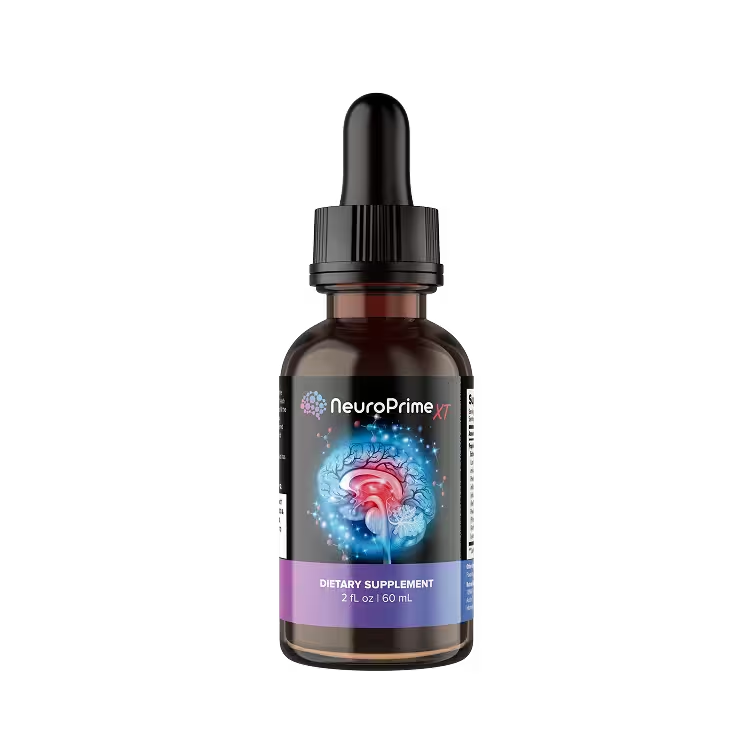
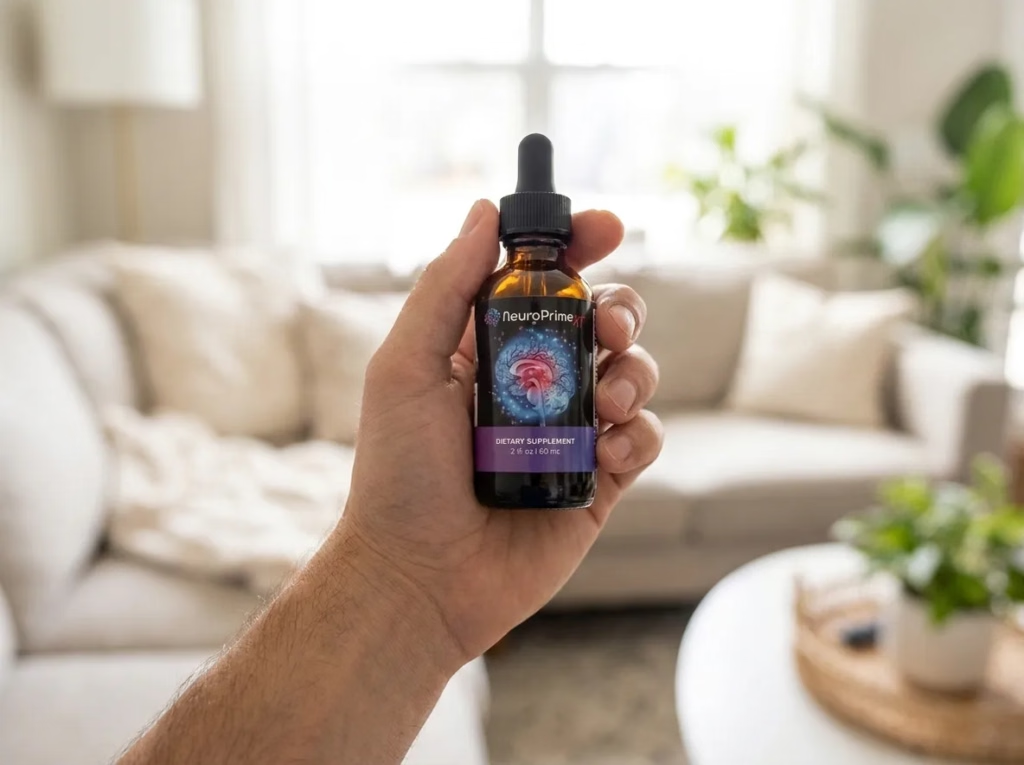
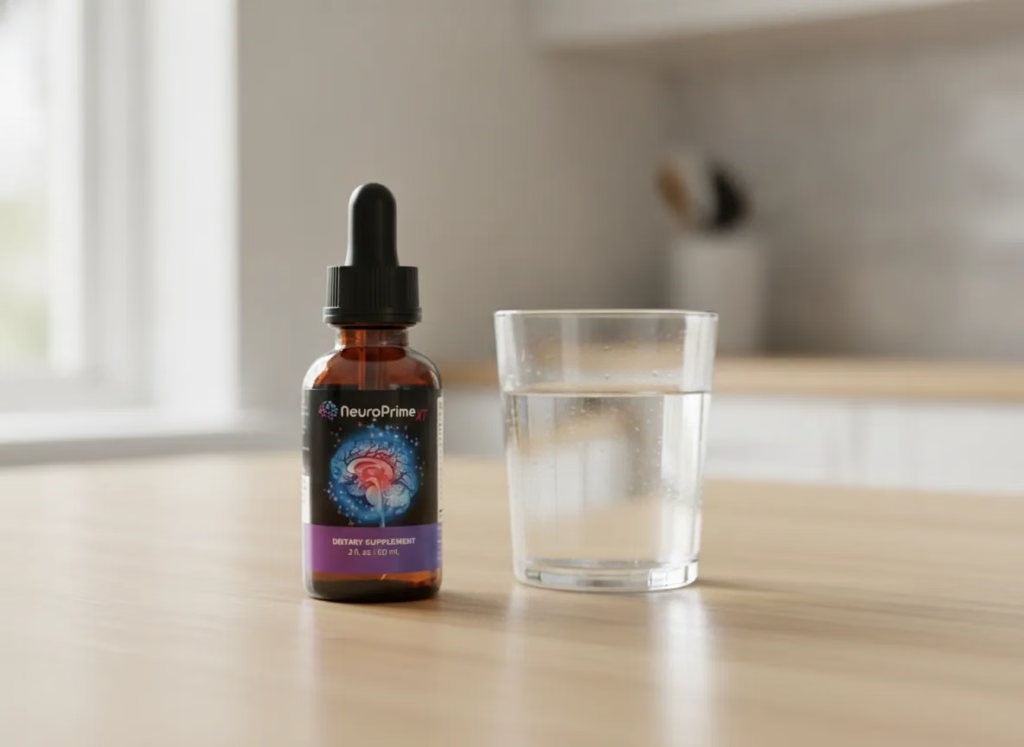
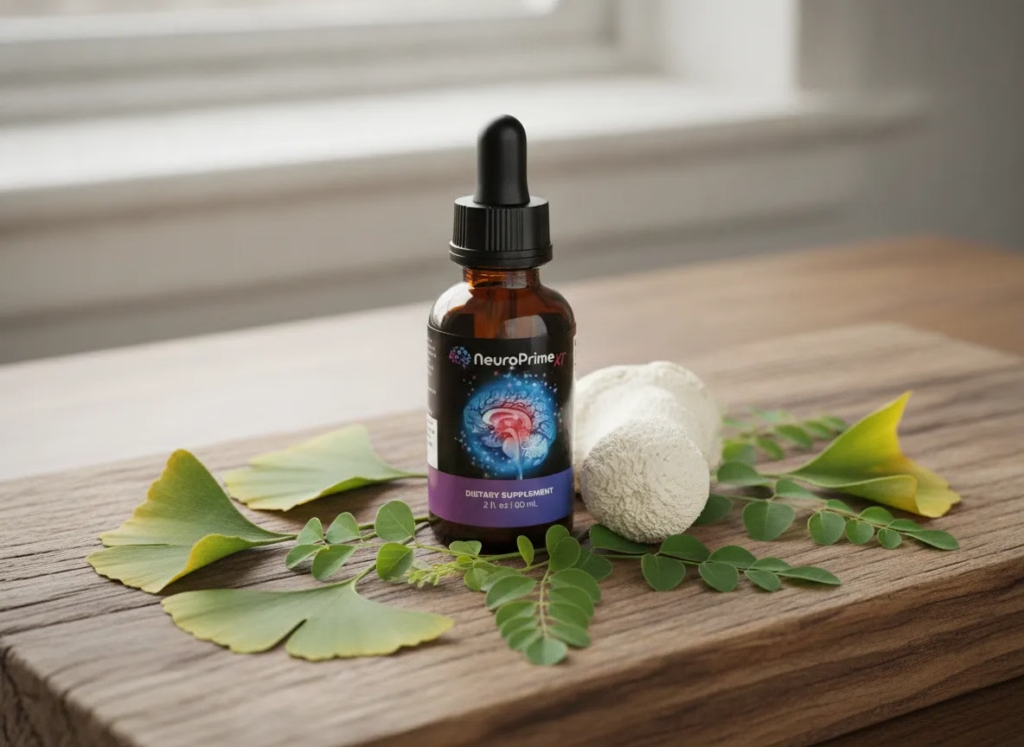
NeuroPrime is a liquid dietary supplement sold through ClickBank and marketed for memory support. The product photo on the official site shows an amber glass dropper bottle labeled NeuroPrime XT, “Dietary Supplement, 2 fl oz, 60 mL.” The sales page lists nine botanical and algae ingredients: moringa, pine bark extract, ginkgo biloba, tamarind, lion’s mane mushroom, chlorella, Bacopa monnieri, spirulina and neem.
What the page does not show is a readable Supplement Facts panel. We checked the main sales page, the affiliate resources page and the ClickBank order page (without entering any details), and none of them lists the amount of any ingredient. In the product images, the side of the label is turned away from the camera, and the small visible portion suggests a proprietary blend, but the text is not legible. For a product built around nine ingredients in a small dropper serving, that missing information matters a great deal.
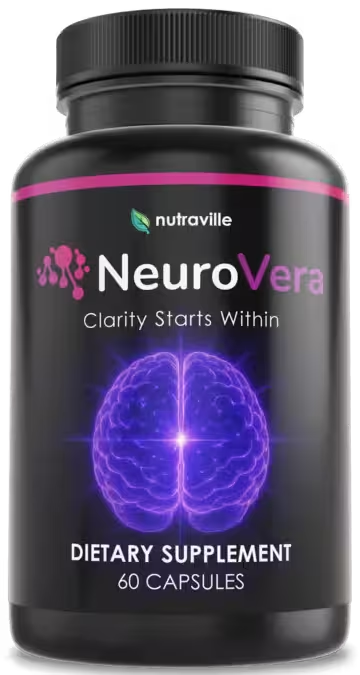
NeuroPrime has a sister product, NeuroVera. The two sites share the same page template, the same 365-day guarantee wording, the same “19,651 reviews” line, the same fulfillment and return address in Tallmadge, Ohio, and the same affiliate tracking network. They are, however, different products: NeuroPrime is a liquid with nine ingredients, while NeuroVera is a 60-capsule formula with five ingredients. Only two ingredients overlap: Bacopa monnieri and lion’s mane.
How NeuroPrime claims to work
The brand describes NeuroPrime as “based off a closely guarded formula” with a “blend of extremely hard to source ingredients” that “helps potentially support memory function.” The sales page does not explain a mechanism in any detail, and none of the nine listed ingredients is rare. Moringa, spirulina, chlorella, ginkgo and bacopa are among the most widely sold botanicals in the US supplement market.
The page also includes a short reference list, and it deserves a careful look. Four of the five references discuss sleep and melatonin, yet melatonin does not appear anywhere in NeuroPrime’s ingredient list. One of those citations uses a DOI that begins with “10.1234,” a prefix that is commonly used as a placeholder in examples, and we could not match it to a real publication. The fifth reference is a real 2022 paper on tamarind, but the sales page paraphrases its title in a softer way; the published study tested tamarind extract in rats, not in people. None of the references studied NeuroPrime itself.
There is also an internal inconsistency in the directions. The FAQ says to take “one drop per day,” shake the bottle well, and add it to a drink if you like. A single drop is a tiny volume, and a 60 mL bottle holds well over a thousand drops, which would not match the stated one-month supply. It is more likely the brand means one dropperful, but the page does not say so, and without the label we cannot confirm the serving size.
What the ingredients actually do
Because no doses are disclosed, everything below describes what each ingredient has shown in research at studied doses. It does not tell you what NeuroPrime delivers.
Bacopa monnieri
Bacopa has the most consistent human evidence in this formula. A 2014 meta-analysis of nine randomized trials found modest improvements on some attention and processing speed tests, while noting that larger, better designed trials are still needed. Those trials typically used around 300 mg per day of a standardized extract for several weeks, which is a meaningful amount of material for a liquid drop.
Ginkgo biloba
Ginkgo is one of the most studied herbs for memory, and the results are underwhelming for most people. A 2026 Cochrane review of 82 trials concluded that in people with mild cognitive impairment, ginkgo probably has little or no effect on cognition at six months, while people with diagnosed dementia may see small to moderate benefits. The National Center for Complementary and Integrative Health notes that ginkgo may raise bleeding risk in people taking anticoagulants such as warfarin.
Lion’s mane mushroom
Lion’s mane has a few small human trials. A 2009 Japanese study of 30 older adults with mild cognitive impairment found better scores on a cognitive scale while participants took 3 grams of dried mushroom powder daily, with scores falling again after they stopped. A 2023 pilot trial in young adults found mixed results. The evidence is promising but preliminary, and the studied amounts are far larger than a dropper is likely to hold.
Pine bark extract
Pine bark extract has been tested across many conditions, but a 2020 Cochrane review of 27 trials concluded that small samples and poor reporting mean no definitive conclusions about efficacy or safety are possible. Memory was not a main focus of that body of research.
Tamarind, moringa, neem, chlorella and spirulina
Tamarind is the ingredient the sales page highlights with a citation, but that work was an animal and laboratory study. Moringa and neem have cognitive claims that rest almost entirely on cell and animal research. Chlorella and spirulina are nutrient-dense algae that add small amounts of protein and pigments; they are not established memory ingredients, and algae products in general carry some risk of contamination with cyanobacterial toxins if quality control is weak.
How NeuroPrime compares with NeuroVera
On paper, NeuroPrime’s formula is broader, with nine ingredients against NeuroVera’s five. Breadth is not the same as strength, though. Four of NeuroPrime’s ingredients (moringa, chlorella, spirulina and neem) are general nutrition or folk-medicine botanicals with little memory-specific human evidence. NeuroVera drops those and instead adds gotu kola, schisandra and shilajit, which also have limited human data. Both share bacopa and lion’s mane, the two ingredients with the most relevant human research in either formula. Neither brand discloses doses, so it is impossible to say which product actually delivers more of those two. The capsule format of NeuroVera at least makes it more plausible that a few hundred milligrams of plant material are present per serving; a liquid serving of nine extracts leaves more room for very small amounts.
Who it may suit, and who should skip it
NeuroPrime may appeal to adults who prefer liquid supplements over capsules and who want a broad botanical blend rather than a single ingredient. If you are mainly concerned about memory changes as you get older, though, a single-ingredient bacopa product with a clearly stated dose will let you judge what you are taking far better than an undisclosed blend.
Several groups should talk to a doctor first or skip it. Ginkgo may increase bleeding risk with blood thinners such as warfarin, antiplatelet drugs or daily aspirin, and before surgery. Bacopa can cause stomach upset and may interact with thyroid medicine and drugs that affect acetylcholine. Algae such as spirulina and chlorella are not advised for people with phenylketonuria, autoimmune conditions or those on immune-suppressing drugs without medical advice. People taking diabetes medicines, sedatives or seizure medicines should check with a pharmacist. NeuroPrime is not advised during pregnancy or breastfeeding, and ginkgo in particular may be unsafe near delivery. Anyone noticing memory changes that are new, worsening, or affecting daily life should see a doctor rather than starting a supplement.
Price, guarantee and where to buy
At the time of review, the official site listed one bottle at $59, three bottles at $147 ($49 each) and six bottles at $234 ($39 each), with free shipping on the six-bottle package. Each bottle is described as a one-month supply. Orders are processed by ClickBank, and the site advertises a 365-day money-back guarantee. The shipping policy adds a condition worth reading: to be eligible for a return, it says your item must be unused and unopened, and you must email support first. That language sits awkwardly next to a guarantee that promises a refund if you are not happy with results, so keep packaging and ask support to confirm the terms in writing before you rely on them. We recommend buying only from the official site, since copies sold elsewhere may not be covered.
Our verdict
NeuroPrime combines two ingredients with real but modest research behind them, bacopa and lion’s mane, with a group of general botanicals that have little memory-specific human evidence. The bigger problem is transparency. There is no readable Supplement Facts panel, the dosing instruction of “one drop” does not add up, and the reference list leans on melatonin studies for a product without melatonin, including one citation we could not verify. Pricing is mid-range for the category and the guarantee window is long, which helps. Overall, we rate NeuroPrime 2.4 out of 5. If you are deciding between the two sister products, NeuroVera scores slightly higher for a tighter formula and lower price, but it has the same disclosure gap. You can also compare more transparent options in our guide to the best brain and focus supplements.
Ingredients and the evidence behind them
| Ingredient | Amount | Why it’s included | Evidence |
|---|---|---|---|
| Bacopa monnieri | Not disclosed | Main memory and attention ingredient; the best researched item in the blend. | Moderate |
| Ginkgo biloba | Not disclosed | Traditional memory and circulation herb. | Limited |
| Lion's mane mushroom | Not disclosed | Medicinal mushroom included for memory and nerve health support. | Preliminary |
| Pine bark extract | Not disclosed | Polyphenol-rich antioxidant extract. | Limited |
| Tamarind | Not disclosed | Fruit extract the brand links to cognition, based on an animal study. | Preliminary |
| Moringa | Not disclosed | Nutrient-dense leaf with antioxidant compounds. | Preliminary |
| Chlorella | Not disclosed | Green algae added as a general nutrition ingredient. | Preliminary |
| Spirulina | Not disclosed | Blue-green algae added as a general nutrition ingredient. | Preliminary |
| Neem | Not disclosed | Traditional Ayurvedic botanical; its role in memory support is not established. | Preliminary |
Each ingredient links to its own page with the research, typical doses and safety notes.
Side effects and who should avoid it
No side effects specific to NeuroPrime have been published, and the product itself has not been studied. Based on its listed ingredients, possible effects include stomach upset, nausea or loose stools (bacopa, algae), headache or dizziness (ginkgo), and dry mouth or fatigue (bacopa). Ginkgo may increase bleeding risk, especially with warfarin, antiplatelet drugs or aspirin and before surgery. Spirulina and chlorella may not suit people with autoimmune conditions, phenylketonuria or those on immune-suppressing medicine, and algae products can be contaminated if poorly sourced. People taking diabetes medicines, sedatives, thyroid medicine or seizure medicine, and anyone pregnant or breastfeeding, should talk to a doctor before use.
FAQ
Is NeuroPrime a liquid or a capsule?
NeuroPrime is a liquid. The product photos show a 2 fl oz (60 mL) dropper bottle labeled NeuroPrime XT. Its sister product NeuroVera is the capsule version from the same sales network, with a different formula.
How much of each ingredient is in NeuroPrime?
We could not find out. The sales page, affiliate page and order page list nine ingredients but no amounts, and the Supplement Facts panel is not readable in any product image. Without doses, it is not possible to compare NeuroPrime with the amounts used in research.
How do you take NeuroPrime?
The brand's FAQ says to take one drop per day, preferably in the morning, on its own or in a drink, after shaking the bottle. A single drop seems inconsistent with a one-month supply in a 60 mL bottle, so check the label on the bottle you receive and ask the company to clarify if it is unclear.
What is the difference between NeuroPrime and NeuroVera?
NeuroPrime is a liquid with nine listed ingredients: moringa, pine bark, ginkgo, tamarind, lion's mane, chlorella, bacopa, spirulina and neem. NeuroVera is a 60-capsule product with five: schisandra, gotu kola, shilajit, lion's mane and bacopa. They share bacopa and lion's mane, and neither discloses doses.
Can I take NeuroPrime with blood thinners?
Talk to your doctor first. NeuroPrime contains ginkgo, which may increase bleeding risk in people taking anticoagulants such as warfarin, according to the National Center for Complementary and Integrative Health.
Does NeuroPrime have a money-back guarantee?
The official site advertises a 365-day money-back guarantee. The shipping and return policy, however, says returned items must be unused and unopened and that you must email support first. Ask support to confirm the terms before ordering.
Reader reviews
No reader reviews yet. If you have tried NeuroPrime, you can be the first to share how it went.
Reader reviews are personal opinions from visitors. We do not verify purchases, and reviews are not medical advice. We publish positive and negative reviews alike; see our review guidelines.
Write a review
Sources
- Official NeuroPrime website. Product details, label and pricing
- Meta-analysis of randomized controlled trials on cognitive effects of Bacopa monnieri extract. J Ethnopharmacol, 2014
- Ginkgo biloba for cognitive impairment and dementia. Cochrane Database Syst Rev, 2026
- Pine bark (Pinus spp.) extract for treating chronic disorders. Cochrane Database Syst Rev, 2020
- Improving effects of the mushroom Yamabushitake (Hericium erinaceus) on mild cognitive impairment: a double-blind placebo-controlled clinical trial. Phytother Res, 2009