What is gotu kola?
Gotu kola (Centella asiatica) is a small creeping plant in the parsley family that grows in wet areas across South and Southeast Asia. Its leaves are eaten as a vegetable in parts of Asia and have a long history in Ayurvedic and traditional Chinese medicine, where the herb has been described as a tonic for the mind and the skin. Despite the similar name, gotu kola is unrelated to the kola nut and contains no caffeine.
The compounds researchers focus on are triterpenes, especially asiaticoside, madecassoside, asiatic acid and madecassic acid. Standardized extracts are usually measured by their content of these compounds, which is one reason results vary so much between products.

What the research says
Interest in gotu kola for memory comes largely from animal studies, where extracts have shown antioxidant effects and changes in learning tasks. Human data are thinner. In a 2008 randomized, placebo-controlled trial, 28 healthy older adults took 250, 500 or 750 mg of gotu kola extract once daily for two months. The highest dose was linked with better working memory scores and improved self-rated mood. The study was small, short and conducted at a single center.
A 2017 systematic review and meta-analysis pulled together five randomized trials of gotu kola alone and six of products containing it. When the data were pooled, gotu kola showed no significant differences from placebo across cognitive domains. It did show some improvement in alertness and a reduction in anger scores shortly after dosing. The authors concluded that there is not strong evidence for using gotu kola to improve cognitive function, and they called for well designed trials using standardized extracts at suitable doses.
Gotu kola has also been studied for skin healing and for vein circulation, but those uses are outside the scope of brain supplements and depend on specific extracts and formulations.
How it’s used in supplements
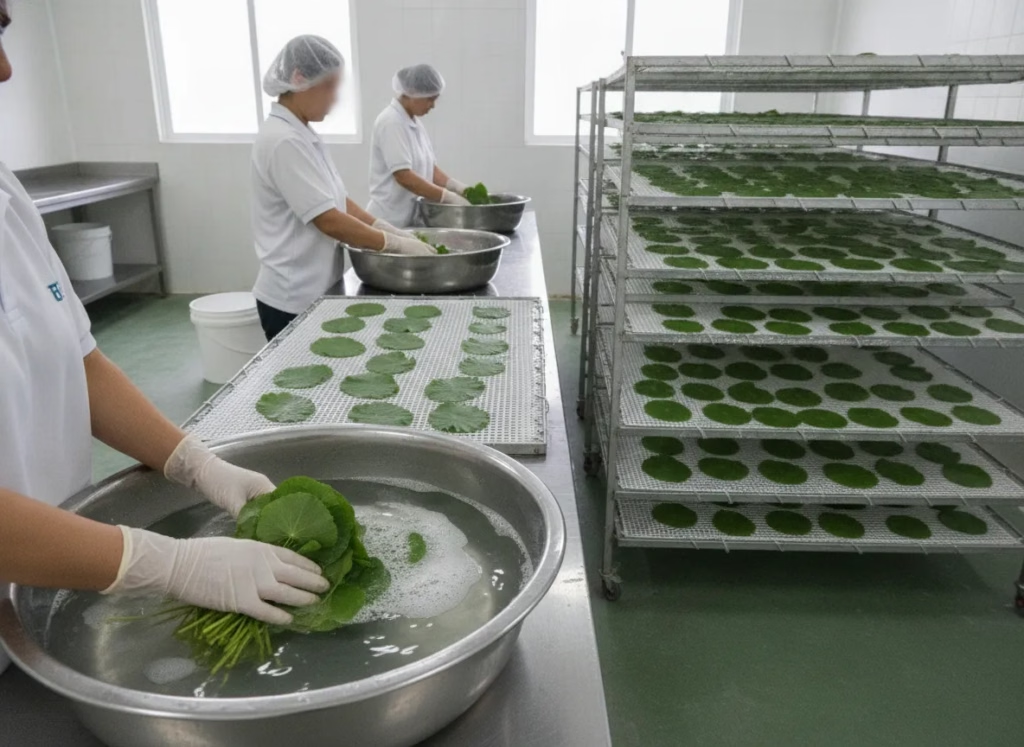
In brain and focus formulas, gotu kola appears either as dried leaf powder or as a standardized extract. Human trials on cognition have generally used 250 to 750 mg of extract per day. Leaf powder is far less concentrated than an extract, so a product listing “gotu kola powder” without a dose gives little indication of how it compares with research amounts.
Gotu kola is usually well tolerated in short studies, with occasional stomach upset, headache or drowsiness. However, a case series from Argentina described three women who developed liver injury after taking gotu kola for 20 to 60 days; all improved after stopping, and one had a recurrence when she resumed it. A 2024 review of herbal liver injury also lists gotu kola among herbs with emerging liver safety signals. For that reason, people with liver disease, those taking medicines that stress the liver, and anyone who drinks alcohol heavily should talk to a doctor first. Because it may add to drowsiness, caution is also sensible with sedatives. Safety in pregnancy and breastfeeding has not been established, so it is best avoided then.
Safety and cautions
Rare reports of liver injury; avoid with liver disease and talk to a doctor if you take medicines that affect the liver. May add to drowsiness with sedatives. Safety in pregnancy and breastfeeding not established.
Supplements we reviewed that contain it

★★★☆☆
NeuroVera reviewNeuroVera is a 60-capsule memory supplement from Nutraville listing five ingredients, including bacopa, lion's mane and gotu kola, with no d...
Reader reviews
No reader reviews yet. If you have tried Gotu kola, you can be the first to share how it went.
Reader reviews are personal opinions from visitors. We do not verify purchases, and reviews are not medical advice. We publish positive and negative reviews alike; see our review guidelines.
Write a review
Sources
- Effects of Centella asiatica (L.) Urb. on cognitive function and mood related outcomes: A Systematic Review and Meta-analysis. Sci Rep, 2017
- Positive modulation of cognition and mood in the healthy elderly volunteer following the administration of Centella asiatica. J Ethnopharmacol, 2008
- Hepatotoxicity associated with the ingestion of Centella asiatica. Rev Esp Enferm Dig, 2005
- A comprehensive review on the hepatotoxicity of herbs used in the Indian (Ayush) systems of alternative medicine. Medicine (Baltimore), 2024