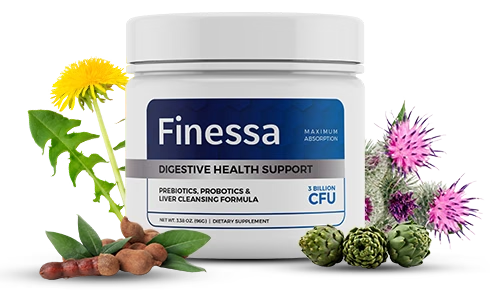
What we like
- Supplement Facts panel shown, with blend totals and named probiotic strains
- Long 180-day money-back guarantee, including used product per the brand
- Uses deglycyrrhizinated licorice, avoiding most licorice blood pressure risk
- Includes Bifidobacterium lactis, the probiotic with the most consistent constipation data
- Low calorie powder with stevia rather than sugar
Watch out for
- Individual ingredient amounts hidden inside four proprietary blends
- Contains cascara sagrada, a stimulant laxative recommended for under one week, in a daily product
- Liver blend (450 mg total) is far below doses used in artichoke and milk thistle research
- Jar image says 3 billion CFU while the label says 5 billion; 50 servings sold as a 30-day supply
- Sales page contains leftover copy for ingredients and testimonials from another product
- Weight loss and 'GLP-1' angles are not supported by evidence for this formula
What is Finessa?
Finessa is a flavored powder sold in a jar labeled “Digestive Health Support” and “Prebiotics, Probiotics & Liver Cleansing Formula.” You mix one scoop into water or another drink each morning. The sales page pitches it for occasional constipation, bloating and “sluggish digestion,” and also for a “flatter belly,” energy and metabolism. The affiliate page frames it for “the GLP-1 & bloating market,” so the real target is adults dealing with irregularity and bloating who also hope to lose weight.
Unlike many products in this category, Finessa shows a Supplement Facts panel. One scoop contains 10 calories, 3 grams of carbohydrate and four proprietary blends: a 1,000 mg Polyphenol Blend (beet root, black currant, pomegranate, raspberry, strawberry, cranberry, blueberry, purple carrot and acai), a 755 mg “Gut Health” blend (cassia cinnamon, ginger, cascara sagrada bark extract, deglycyrrhizinated licorice and fructooligosaccharides), a 450 mg Liver Health Blend (dandelion root, turmeric root, milk thistle, artichoke extract and silymarin) and a 52.5 mg Probiotic Blend listed at 5 billion CFU at manufacture, plus 2 mg of Akkermansia muciniphila. Other ingredients include resistant dextrin, natural flavors, citric acid, sea salt, stevia and silicon dioxide.
Because the amounts are given only per blend, we rate disclosure as partial. You know the blend totals, not how much cascara, milk thistle or any single probiotic strain you are getting.
How Finessa claims to work
The brand’s central idea is the “gut-liver axis”: the gut and liver exchange signals, and bile from the liver helps digest fat. Finessa says it boosts bile flow, supports the gut lining, feeds good bacteria and flushes “stubborn waste,” leading to “a lighter, flatter, more comfortable belly.” The page adds claims for healthier cholesterol, balanced blood sugar, steady energy and a “revved-up metabolism,” and calls Finessa “the only formula to target the critical gut-liver axis.”
The gut-liver axis is a real research topic, but none of that research tested Finessa. Several parts of the sales page also look recycled. Hidden page code contains copy about camu camu, EGCG, mangosteen, ashwagandha and other ingredients that are not on the Finessa label, along with a heading for a different product’s testimonials. The jar image says “3 Billion CFU” while the label says 5 billion. The label lists 50 servings per jar, yet the brand sells each jar as a 30-day supply. None of this is proof of a problem with the powder itself, but it suggests the marketing was assembled quickly.
What the ingredients actually do
Cascara sagrada: the likely driver of “regularity”
Cascara is a stimulant laxative made from buckthorn bark. Its anthraquinone compounds irritate the colon and speed transit. LiverTox describes it as generally safe for short-term use but recommends it for “less than one week,” notes cramping and electrolyte imbalance as side effects, and describes rare liver injury with longer, higher-dose use (LiverTox: Cascara). Finessa is meant to be taken every morning for months. Since the cascara amount is hidden inside the 755 mg blend, we cannot estimate how strong the effect is. If Finessa makes you “regular” quickly, cascara is the most plausible reason, and that is not the same as improving gut health. See our new cascara sagrada page.
Probiotics and Akkermansia
Probiotics have mixed evidence for constipation. A 2022 meta-analysis of 30 trials found probiotics modestly increased stool frequency, with Bifidobacterium lactis standing out, while mixtures and Bacillus coagulans Unique IS2 did not show a clear effect (van der Schoot et al., 2022). Finessa includes B. lactis BLa80 and B. coagulans BC99, but the strains differ from those tested and the per-strain amounts are not given. Akkermansia showed metabolic improvements in a small trial that used about 10 billion bacteria a day (Depommier et al., 2019); Finessa lists it by weight (2 mg) without a cell count. Learn how to read these labels in probiotic labels decoded.
Liver blend
Milk thistle is well tolerated, but NCCIH says evidence for liver conditions is “conflicting or too limited,” and two NIH-funded trials of silymarin did not show benefit (NCCIH: Milk Thistle). Artichoke leaf extract has a better trial for indigestion: 640 mg three times a day improved functional dyspepsia symptoms over six weeks (Holtmann et al., 2003), far more than Finessa’s entire 450 mg liver blend. NCCIH notes there is no compelling evidence for dandelion for any condition (NCCIH: Dandelion), and turmeric’s evidence is still limited (NCCIH: Turmeric).
Polyphenol and gut health blends
The 1,000 mg fruit and vegetable powder blend supplies polyphenols, but a gram of mixed powders is roughly what you would get from a few bites of produce. Ginger may ease nausea (NCCIH: Ginger), and the licorice is deglycyrrhizinated, which avoids most of licorice’s blood pressure risk (NCCIH: Licorice Root). Fructooligosaccharides and resistant dextrin are fermentable fibers that can feed gut bacteria but may also increase gas at first, which is worth knowing if bloating is your main complaint.
Who it may suit, and who should skip it
Finessa may suit adults with occasional, short-lived constipation who prefer a drink to a capsule and who are comfortable with a mild stimulant laxative in the mix. If irregularity is ongoing, the first steps are usually more fiber introduced gradually, fluids and activity; our guides on sluggish, irregular bowel movements and getting more fiber without gas cover these.
Skip Finessa, or ask your doctor first, if you are pregnant or breastfeeding (LactMed advises avoiding cascara while nursing), have inflammatory bowel disease, unexplained abdominal pain, a bowel obstruction or kidney disease, or take diuretics, heart rhythm drugs such as digoxin, blood thinners, or diabetes medication. People with weakened immune systems should talk with a doctor before using probiotics. New constipation, blood in the stool or unexplained weight loss need medical attention, not a supplement. For other options, see our gut health hub.
If you do try it, a cautious approach is to start with half a scoop for the first few days to see how your bowels respond, keep a simple log of stool frequency and bloating, and stop if you get cramping or diarrhea. Do not combine it with other laxatives or “cleanse” teas, which often contain senna, another anthraquinone.
Price, guarantee and where to buy
Finessa is sold through its official website, with ClickBank as the retailer. At the time of our review, one jar cost $59 plus shipping, three jars cost $147 ($49 each) plus shipping and six jars cost $234 ($39 each) with free US shipping. Multi-jar orders include three digital bonuses. The FAQ says Finessa is produced in a GMP-certified lab and tested for quality and purity, but the site does not name the manufacturer, say where it is made or post third-party test results. The brand offers a 180-day money-back guarantee and says it covers you “even if you’ve used up your order,” which is one of the longer refund windows we see. Check the current terms before ordering.
Our verdict
Finessa deserves credit for showing a real Supplement Facts panel and for a long 180-day guarantee. But the formula spreads about 2.3 grams across more than 20 ingredients, hides individual amounts inside blends, and leans on cascara sagrada, a stimulant laxative meant for short-term use, in a product designed for daily, long-term use. The marketing also contains recycled copy and inconsistent CFU and serving claims. We rate it 2.8 out of 5. Compare it with other options in our best gut health supplements guide.
Ingredients and the evidence behind them
| Ingredient | Amount | Why it’s included | Evidence |
|---|---|---|---|
| Cascara Sagrada | Not disclosed (part of a 755 mg Gut Health blend) | Stimulant laxative that likely drives the 'regularity' effect; recommended for short-term use only. | Moderate |
| Akkermansia Muciniphila | 2 mg (no CFU count stated; strain AH39) | Gut bacterium marketed for metabolism; one small trial showed improved insulin sensitivity at about 10 billion cells a day, but no evidence for constipation. | Preliminary |
| Milk Thistle | Not disclosed (part of a 450 mg Liver Health blend, with silymarin 80%) | Included for liver and bile support; evidence for liver conditions is conflicting. | Limited |
| Artichoke | Not disclosed (part of a 450 mg Liver Health blend; std. to 5% cynarin) | Leaf extract studied for indigestion at much higher doses (640 mg three times daily). | Limited |
| Dandelion | Not disclosed (part of a 450 mg Liver Health blend) | Root powder promoted for digestion and bile flow; NCCIH finds no compelling evidence. | Preliminary |
| Turmeric | Not disclosed (part of a 450 mg Liver Health blend) | Root powder promoted to soothe digestion; evidence for digestive benefits is limited. | Limited |
| Licorice Root | Not disclosed (deglycyrrhizinated extract in a 755 mg Gut Health blend) | DGL form promoted for stomach comfort; unclear evidence for digestive symptoms. | Limited |
| Ginger | Not disclosed (part of a 755 mg Gut Health blend) | Included for digestive comfort; best evidence is for nausea. | Moderate |
| Cinnamon | Not disclosed (cassia bark in a 755 mg Gut Health blend) | Flavor and marketed metabolic support; research does not clearly support any health use. | Limited |
| Beet Root | Not disclosed (lead ingredient of a 1,000 mg Polyphenol blend) | Part of a fruit and vegetable polyphenol blend; beet nitrate is studied for blood pressure at much larger doses. | Limited |
| Bacillus Coagulans | About 20% of a 5 billion CFU probiotic blend (strain BC99) | Spore-forming probiotic; a pooled analysis did not find a clear constipation benefit for the strain studied. | Limited |
| Lactobacillus Acidophilus | About 30% of a 5 billion CFU probiotic blend (strain LA85) | Common probiotic in the blend; evidence for constipation depends on strain and is mixed. | Limited |
Each ingredient links to its own page with the research, typical doses and safety notes.
Side effects and who should avoid it
The cascara sagrada in Finessa can cause abdominal cramps, diarrhea and loss of potassium and other electrolytes, and long-term or high-dose use has been linked to a ‘cathartic colon’ and rare cases of liver injury. Fermentable fibers (fructooligosaccharides and resistant dextrin) and probiotics may cause gas and bloating at first. Turmeric can upset the stomach, and milk thistle, artichoke and dandelion may cause allergic reactions in people sensitive to ragweed and related plants. Cassia cinnamon contains coumarin, which can affect the liver in sensitive people. Avoid Finessa during pregnancy and breastfeeding, and talk with your doctor first if you take diuretics, digoxin or other heart medications, blood thinners or diabetes medication, have kidney or liver disease, inflammatory bowel disease or a weakened immune system. Stop and seek care for severe abdominal pain, blood in the stool, yellowing skin or dark urine.
FAQ
What is Finessa used for?
The brand markets Finessa for occasional constipation, bloating and sluggish digestion, along with a flatter belly, energy and metabolism. Its affiliate materials also target people interested in natural alternatives to GLP-1 drugs, a claim the formula's evidence does not support.
Does Finessa contain a laxative?
Yes. Its 755 mg Gut Health blend includes cascara sagrada bark extract, a stimulant laxative. LiverTox recommends cascara for short-term use only, less than one week. The exact amount in Finessa is not disclosed.
How many probiotics are in Finessa?
The label lists a 52.5 mg probiotic blend at 5 billion CFU at the time of manufacture, plus 2 mg of Akkermansia muciniphila. The jar image on the sales page says 3 billion CFU, so check the label on the product you receive.
Will Finessa help me lose weight?
There is no evidence that this formula causes fat loss. A stimulant laxative can reduce stool and water weight, which is not the same as losing body fat. Akkermansia showed small, non-significant weight changes in one trial using a much better defined dose.
How long is Finessa's guarantee?
The brand offers a 180-day money-back guarantee and says it applies even if you have used up your order. Contact customer service through the official site to request a refund.
Is Finessa safe to take every day?
Most ingredients are food-like and well tolerated, but cascara sagrada is intended for short-term use. Daily use over months is not how stimulant laxatives are recommended, so talk with your doctor before long-term use, especially if you take heart or diuretic medications.
Sources
- Official Finessa website. Product details, label and pricing
- Probiotics and synbiotics in chronic constipation in adults: A systematic review and meta-analysis of randomized controlled trials. Clin Nutr, 2022
- Inorganic nitrate and beetroot juice supplementation reduces blood pressure in adults: a systematic review and meta-analysis. J Nutr, 2013
- Supplementation with Akkermansia muciniphila in overweight and obese human volunteers: a proof-of-concept exploratory study. Nat Med, 2019
- Efficacy of artichoke leaf extract in the treatment of patients with functional dyspepsia: a six-week placebo-controlled, double-blind, multicentre trial. Aliment Pharmacol Ther, 2003