What we like
- Most ingredient amounts are disclosed on the label
- Decaffeinated green tea extract, so no stimulants
- Sphaeranthus and mangosteen combination has two placebo-controlled trials
- Delayed-release capsules designed to protect the probiotics
- 180-day money-back guarantee and no subscription, per the brand
Watch out for
- Probiotic strain codes are not listed, so studies cannot be matched to the product
- Seven of the nine strains sit in an undisclosed 10 mg proprietary blend
- Sphaeranthus and mangosteen provided at 400 mg, half the 800 mg used in trials
- Highlighted green tea trial had no placebo group
- No single-bottle option on the main sales page; minimum order is two bottles
- Marketing presents the microbiome as the root cause of weight gain, which oversimplifies the science
What is LeanBiome?
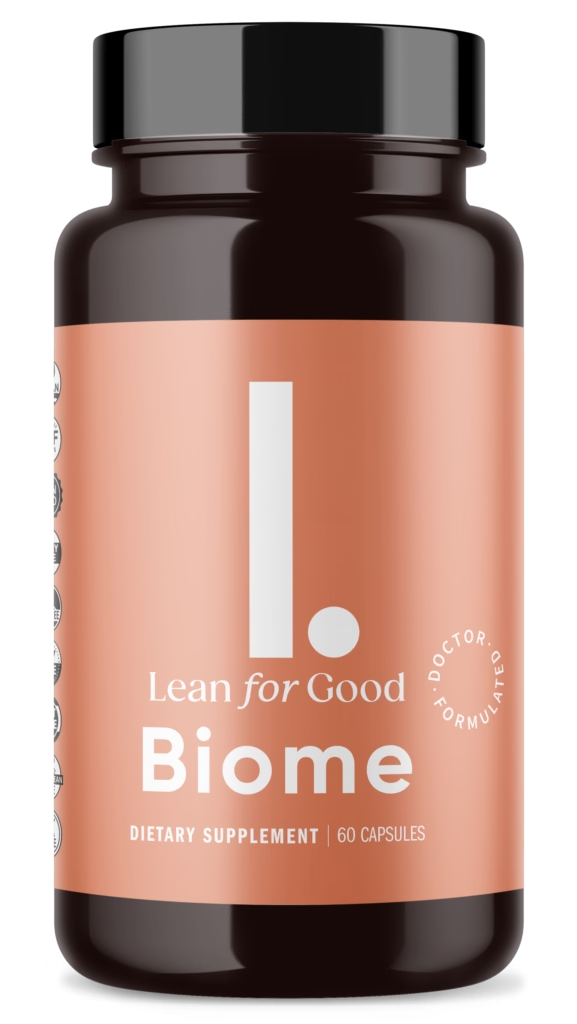
LeanBiome is a probiotic-based weight management supplement sold online through ClickBank by a company called Lean for Good, which lists a distribution address in Tallmadge, Ohio. The current bottle and label call the product simply “Biome”, but it is still widely known and searched as LeanBiome. Each bottle holds 60 delayed-release capsules, and the suggested serving is two capsules a day, so one bottle lasts about 30 days.
Unlike many products in this category, LeanBiome publishes a fairly detailed supplement facts panel. Per two-capsule serving it lists:
- Lactobacillus gasseri: 25 mg (10 billion CFU)
- Lactobacillus rhamnosus: 10 mg (5 billion CFU)
- A 10 mg (5 billion CFU) proprietary blend of seven more strains: L. fermentum, L. paracasei, L. plantarum, Bifidobacterium bifidum, B. lactis, B. longum and B. breve
- Inulin from chicory root: 200 mg
- Green tea phytosome (decaffeinated green tea extract bound to sunflower phospholipids): 300 mg
- Sphaeranthus indicus: 300 mg
- Garcinia mangostana (mangosteen fruit rind): 100 mg
The brand says the capsules are vegan, gluten free, non-GMO and made in the USA in an FDA-inspected, GMP-certified facility. The label does not name the specific probiotic strain codes, which matters because probiotic research is strain specific. Our guide to reading probiotic labels explains why.
How LeanBiome claims to work
The sales page argues that the gut microbiome is “the root cause” of belly fat and weight gain. It points to research comparing the gut bacteria of lean and heavier people, including twin studies, and says that adding “lean bacteria” species will rebalance the gut, curb hunger and cravings, raise metabolism and reduce fat storage.
The gut microbiome is an active area of obesity research, and differences in gut bacteria between lean people and people with obesity are well documented. But “associated with” is not the same as “caused by”, and swallowing a handful of probiotic strains has not been shown to reshape the microbiome into a “lean” profile. The idea that gut bacteria are the single root cause of weight gain is an oversimplification. Weight is shaped by diet, activity, sleep, medications, genetics, hormones and more.
The sales page also cites individual trials with eye-catching results. As we explain below, those studies used specific strains, different doses or different study designs from what is in this bottle, so their results cannot simply be transferred to LeanBiome.
What the ingredients actually do
The probiotics
The brand’s headline study for Lactobacillus gasseri is a 12-week Japanese trial in 210 adults with excess abdominal fat. People who drank fermented milk containing the strain L. gasseri SBT2055 saw visceral fat area fall by about 8.5% from baseline, while the control group did not, and the effect faded after they stopped. It was a well-run trial, but it tested one specific strain delivered in fermented milk. LeanBiome does not state which L. gasseri strain it uses.
For Lactobacillus rhamnosus, the cited trial used the strain CGMCC1.3724 together with inulin and oligofructose during a calorie-restricted diet. Across all participants, weight loss was not significantly different from placebo. A benefit appeared only in the women in the study, a subgroup finding that needs confirmation. The cited Lactobacillus fermentum data come from a small, short study that we could not locate in the major medical databases.
Looking at the bigger picture, a 2018 meta-analysis of 15 randomized trials in people with overweight or obesity found that probiotics reduced body weight by an average of only 0.6 kg compared with placebo, an effect the authors called small. The NIH Office of Dietary Supplements describes probiotic effects on body weight and body fat as inconsistent. The 200 mg of inulin is a small prebiotic dose compared with the several grams used in fiber studies.
Green tea phytosome
The green tea ingredient is decaffeinated green tea extract bound to phospholipids to aid absorption. The brand highlights a 2009 trial of a branded green tea phytosome product in 100 adults with obesity on a low-calorie diet. After 90 days, the green tea group lost about 14 kg versus 5 kg in the diet-only group. That trial did not use a placebo, and participants knew which group they were in, which can inflate results. A Cochrane review of green tea preparations found that weight loss in most trials outside Japan was small and not clinically important.
Sphaeranthus indicus and Garcinia mangostana
These two plant extracts are the formula’s most interesting addition. A branded blend of Sphaeranthus indicus flower heads and Garcinia mangostana fruit rind was tested in two placebo-controlled trials of about 60 people each. With a controlled 2,000 calorie diet and daily walking, the herbal group lost about 3.7 kg more than placebo after 8 weeks in one trial, and about 5.1 kg versus 1.1 kg after 16 weeks in the other. Those trials used 800 mg per day. LeanBiome provides 400 mg combined (300 mg plus 100 mg), and the label does not say whether it uses the same branded extract. A 2020 systematic review called results for this combination promising but based on few studies of limited quality.
In short, LeanBiome’s ingredients have a real research base, but each piece is either a different strain, a different dose or a weaker study design than the one the marketing describes.
Who it may suit, and who should skip it
LeanBiome may suit healthy adults who want a capsule that combines a probiotic, a decaffeinated green tea extract and a plant extract blend, and who are already working on diet and activity. Because the green tea extract is decaffeinated, it may be an option for people who avoid stimulants. If cravings are a problem, see our guide to constant sugar cravings, and if progress has stalled, our article on weight loss plateaus.
Skip it, or talk to your doctor first, if you:
- Have a weakened immune system, a central line, short bowel syndrome or a serious illness, since probiotics carry a small risk of infection in these groups.
- Have liver disease, given rare reports of liver injury linked to concentrated green tea extracts.
- Take blood thinners, diabetes medications or other prescription drugs, because the plant extracts have not been well studied for interactions.
- Are pregnant, breastfeeding or under 18, as the label itself advises.
Unexplained weight gain can have medical causes, such as thyroid problems or medication side effects, so it is worth discussing with a doctor.
Price, guarantee and where to buy
On the official website, the smallest package is two bottles for $158 ($79 each) plus $9.95 US shipping. Three bottles cost $207 ($69 each) plus shipping, and six bottles cost $294 ($49 each) with free US shipping. The brand describes each order as a one-time payment with no subscription and offers a 180-day “empty bottle” money-back guarantee, even if the capsules have been used.
Buy only from the official website. Products sold elsewhere under the same name may be counterfeit or stored poorly, which matters for live probiotics, and they may not be covered by the guarantee.
Our verdict
LeanBiome is more transparent than most weight supplements sold through affiliate networks. Most doses are on the label, the green tea extract is caffeine free, and the Sphaeranthus and mangosteen combination has some placebo-controlled human data. Still, the marketing overstates the science: the probiotic strains are not identified, the plant blend is at half the studied dose, and the green tea trial it highlights had no placebo. Expect a modest effect at best, alongside diet and exercise. We rate it 3.2 out of 5, helped by its label transparency and long refund window. Compare it with other options in our best weight management supplements guide, or browse the weight management hub.
Ingredients and the evidence behind them
| Ingredient | Amount | Why it’s included | Evidence |
|---|---|---|---|
| Lactobacillus gasseri | 25 mg (10 billion CFU); strain not specified | Lead probiotic strain marketed for belly fat | Limited |
| Lactobacillus rhamnosus | 10 mg (5 billion CFU); strain not specified | Second named probiotic strain, marketed for weight loss | Limited |
| Lactobacillus fermentum | Undisclosed (part of 10 mg, 5 billion CFU proprietary blend) | Probiotic strain marketed for body fat reduction | Preliminary |
| Lactobacillus paracasei | Undisclosed (part of 10 mg, 5 billion CFU proprietary blend) | Supporting probiotic strain | Limited |
| Lactobacillus plantarum | Undisclosed (part of 10 mg, 5 billion CFU proprietary blend) | Supporting probiotic strain | Limited |
| Bifidobacterium lactis | Undisclosed (part of 10 mg, 5 billion CFU proprietary blend) | Supporting probiotic strain | Limited |
| Inulin | 200 mg (from chicory root) | Prebiotic fiber intended to feed the probiotic strains | Limited |
| Green Tea Extract (Greenselect Phytosome) | 300 mg (decaffeinated green tea extract in a sunflower phospholipid complex) | Caffeine-free green tea ingredient marketed for weight loss | Moderate |
| Sphaeranthus indicus | 300 mg | Half of a two-herb blend studied for weight management | Limited |
| Garcinia mangostana | 100 mg (fruit rind) | Half of a two-herb blend studied for weight management | Limited |
Each ingredient links to its own page with the research, typical doses and safety notes.
Side effects and who should avoid it
Probiotics and inulin commonly cause temporary gas, bloating or changes in bowel habits during the first days of use. In people with weakened immune systems or serious illness, probiotics carry a small risk of infection, so they should not be used in these situations without medical advice. Concentrated green tea extracts have been linked to rare cases of liver injury; stop use and seek care if you notice dark urine, yellowing skin or eyes, or upper abdominal pain. The Sphaeranthus and mangosteen blend was well tolerated in short trials, but long-term safety and drug interactions are not well studied. Talk to your doctor before use if you take blood thinners, diabetes medications or other prescriptions, and do not use it if you are pregnant, breastfeeding or under 18.
FAQ
Is LeanBiome the same as Biome by Lean for Good?
Yes. The product sold at the LeanBiome sales page now carries the name Biome on its label, made by Lean for Good. The formula on the current label is the one reviewed here.
How many CFU does LeanBiome contain?
The label lists 20 billion CFU per two-capsule serving: 10 billion L. gasseri, 5 billion L. rhamnosus and 5 billion across seven other strains in a proprietary blend.
Does LeanBiome contain caffeine?
The green tea phytosome is listed as decaffeinated, and no other caffeine sources appear on the label.
Will LeanBiome help me lose weight without dieting?
We would not expect it to. The trials behind its ingredients paired them with calorie control, exercise or both, and probiotic effects on weight in meta-analyses are small.
Are there side effects?
Gas, bloating and bowel changes are the most common early effects of probiotics and inulin. People with weakened immunity or liver disease should talk to a doctor first.
What is the refund policy?
The brand offers a 180-day money-back guarantee, including on empty bottles, for orders placed through the official website.
Reader reviews
No reader reviews yet. If you have tried LeanBiome, you can be the first to share how it went.
Reader reviews are personal opinions from visitors. We do not verify purchases, and reviews are not medical advice. We publish positive and negative reviews alike; see our review guidelines.
Write a review
Sources
- Official LeanBiome website. Product details, label and pricing
- Effect of Lactobacillus gasseri SBT2055 in fermented milk on abdominal adiposity in adults in a randomised controlled trial. Br J Nutr, 2013
- Effects of probiotics on body weight, body mass index, fat mass and fat percentage in subjects with overweight or obesity: a systematic review and meta-analysis of randomized controlled trials. Obes Rev, 2018
- Green tea for weight loss and weight maintenance in overweight or obese adults. Cochrane Database Syst Rev, 2012
- Efficacy and tolerability of Meratrim for weight management: a randomized, double-blind, placebo-controlled study in healthy overweight human subjects. Lipids Health Dis, 2016