What we like
- Ingredient types (oral lactobacilli, xylitol, cranberry) have some oral health research
- Inactivated (postbiotic) form avoids concerns about live bacteria surviving storage
- Vegan, gluten-free and soy-free according to the label
- One-time payment with no auto-ship, per the brand
- 60-day money-back guarantee
Watch out for
- No Supplement Facts panel found; strains and amounts are undisclosed
- Strain-specific human research does not transfer to unnamed postbiotic strains
- FabM "acid-lock" claim is based on lab and rat genetics, not human trials
- Sales page uses unsupported percentages and dramatic testimonials
- Smallest purchase is two bottles ($158)
- Xylitol per tablet is likely far below amounts used in cavity studies
What is DentaBiome?
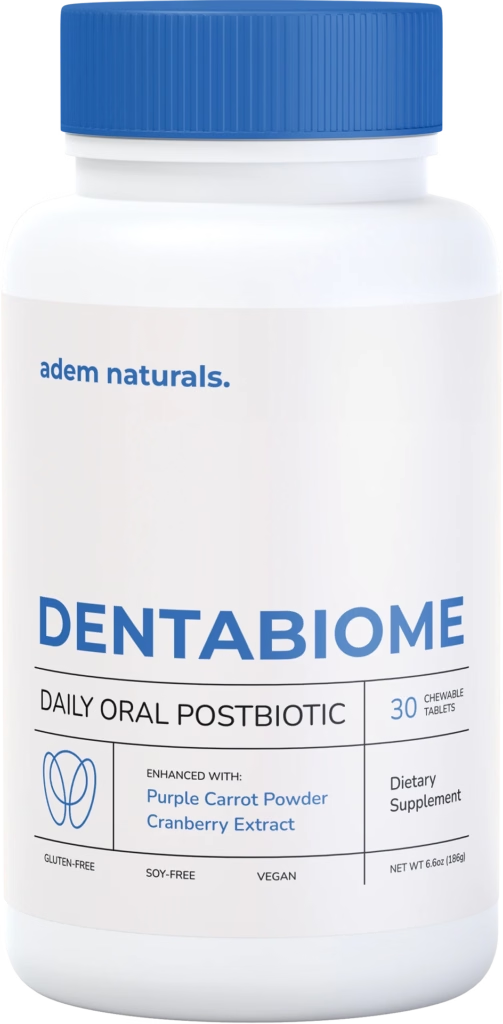
DentaBiome is a chewable oral-care supplement from Adem Naturals, a company with a return address in Tallmadge, Ohio. Each bottle holds 30 berry-flavored chewable tablets (“Berry Frost”), and the directions are one tablet a day, so a bottle lasts about a month. The bottle is labeled “Daily Oral Postbiotic, enhanced with purple carrot powder and cranberry extract”, and the brand describes it as vegan, gluten-free, soy-free and non-GMO.
The sales page lists these components: a “dual-strain” Lactobacillus plantarum complex, Lactobacillus salivarius, Lactobacillus rhamnosus, an enzyme blend called “BioFresh Clean Complex”, xylitol, purple carrot powder and cranberry extract. It calls the whole formula “a unique proprietary blend”. We could not find a Supplement Facts panel on the sales page, the affiliate page or the ClickBank order page, so the strains’ exact names, their amounts, the enzymes in the BioFresh complex and the xylitol content are all unknown.
That is a meaningful gap for an oral microbiome product. In probiotic and postbiotic research, effects are tied to specific strains (for example L. salivarius WB21 or L. rhamnosus GG) at specific doses. A label that only gives the species name does not let you match the product to any study.
How DentaBiome claims to work
The marketing centers on an enzyme called FabM. According to the sales page, “Scandinavian military research” found that FabM creates an “acid-lock” around harmful mouth bacteria that protects them from brushing, mouthwash and cleanings, and DentaBiome is designed to break that lock.
FabM is real, but the story is stretched. Laboratory work from the University of Rochester in 2004 showed that the fabM gene helps Streptococcus mutans, a main cavity-causing bacterium, make certain membrane fats that let it survive in acidic conditions. When researchers knocked the gene out, the bacteria became very acid-sensitive, and a follow-up study in rats found fewer and less severe cavities with the modified strain. These were genetic experiments in the lab and in animals. We found no human research showing that any supplement, postbiotic or food extract inhibits FabM in the mouth, and none showing that DentaBiome does.
The page also states that the formula “eradicates S. mutans by over 99.9%”, that it reduces harmful bacteria by specific percentages within days, and it features testimonials about avoiding dental surgery. Those figures are not linked to any study of the product, and a footer notes that the page’s narrator is a fictional character. Testimonials like these are not evidence, and nobody should cancel recommended dental treatment based on them.
The “postbiotic” angle deserves a fair explanation. Postbiotics are preparations of inactivated (non-living) microbes or their components that may still have biological effects. A 2025 systematic review of postbiotics and tooth decay found 21 studies, 18 of them in the lab, showing that Lactobacillus-derived postbiotics can inhibit S. mutans growth and biofilm. Only three were clinical trials, so the human evidence is still thin. The brand’s claim that postbiotics are “clinically proven” and carry “zero risk” goes well beyond that.
What the ingredients actually do
Lactobacillus strains
Lactobacillus salivarius has some of the more relevant oral research, mostly using the live WB21 strain in Japan. In a 2014 double-blind crossover trial, WB21 tablets lowered volatile sulfur compounds (a measure of bad breath) and pocket depth compared with placebo over two weeks, although the smell-test scores improved in both groups. An earlier 8-week trial found modest gum benefits, mainly in smokers.
Lactobacillus rhamnosus is best known through the GG strain. A Finnish trial of 594 young children found that milk containing live LGG for seven months was linked to less tooth decay and lower S. mutans counts. That was a different form, population and delivery than a daily chewable postbiotic for adults.
Lactobacillus plantarum is widely studied for gut health, and lab studies show plantarum-derived postbiotics can slow S. mutans biofilms. Clinical oral evidence is limited.
Across probiotics in general, two meta-analyses of randomized trials (2022 and 2025) found that probiotics reduced bad-breath measures in the short term, with weaker or inconsistent effects longer term. That supports the idea that oral bacteria products may help some people with breath, but it cannot be transferred to DentaBiome’s unnamed strains in heat-killed form.
Xylitol, cranberry and purple carrot
Xylitol is the most established ingredient here. It is a sugar alcohol that cavity-causing bacteria cannot ferment well, and it is widely used in sugar-free gum and mints. Benefits in studies usually come from several grams spread through the day, so the small amount that fits in one chewable tablet may contribute little. Our article on xylitol gum and cavities covers the dose question in more detail.
Cranberry polyphenols have been shown in lab studies to interfere with S. mutans adhesion and acid production, but human oral trials are scarce. Purple carrot powder supplies anthocyanins, plant pigments with antioxidant activity; we found no clinical evidence for oral health. The “BioFresh Clean Complex” enzyme blend is not defined, so it cannot be evaluated.
Who it may suit, and who should skip it
DentaBiome may appeal to adults who already brush twice a day with fluoride toothpaste, clean between their teeth and see a dentist regularly, and who want to try an oral bacteria product for breath freshness. For persistent breath problems, our page on bad breath that keeps coming back explains common causes, including tongue coating, dry mouth and gum disease. If your gums bleed, read bleeding gums when brushing; the NIDCR notes that bleeding gums can be an early sign of gum disease, which needs professional care. If you often wake with a dry mouth, see waking up with a dry mouth.
Skip it or ask your dentist or doctor first if any of these apply:
- You have active tooth pain, swelling, a loose tooth or signs of infection. These need dental treatment.
- You have a weakened immune system, a heart valve condition or a central line, situations in which bacterial products deserve medical review even when inactivated.
- You take warfarin; there is conflicting evidence on whether cranberry interacts with it.
- You are pregnant or breastfeeding and want to confirm the full label first.
- You have a dog at home. Xylitol is highly toxic to dogs, so store chewables securely.
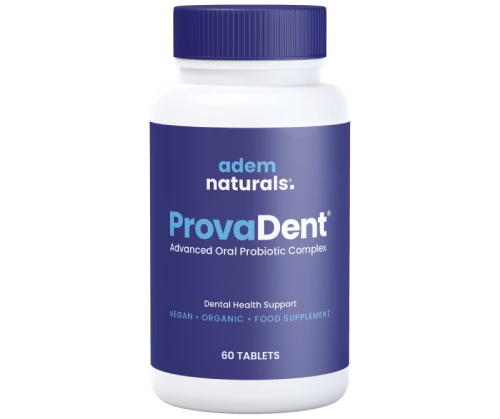
If you are comparing oral health supplements, our guides to the best oral health supplements and the best-researched ingredients for oral health explain which strains and ingredients have the most human data. Our explainer on oral probiotics and bad breath is also relevant. DentaBiome differs from live-probiotic chewables such as ProDentim in using inactivated bacteria, which avoids survival concerns but also means much of the existing live-strain research does not apply directly.
Price, guarantee and where to buy
At the time of our review, the official site did not sell single bottles. It offered two bottles for $158 ($79 per bottle), three bottles for $207 ($69 per bottle) and six bottles for $294 ($49 per bottle). The three- and six-bottle packages include two bonus e-books and free US shipping. The brand states that orders are a one-time payment with no auto-ship. Prices can change, so confirm them at checkout.
Orders are processed by ClickBank and covered by a 60-day money-back guarantee. The FAQ says you return all bottles, even empty ones, for a full refund. Keep your order number and tracking details. Buy only from the official site.
Our verdict
DentaBiome uses ingredient types that are reasonable for oral care: Lactobacillus species with some breath and gum research, xylitol, and cranberry. But the product hides its strains and doses inside a proprietary blend, its “FabM acid-lock” story leaps from lab genetics to marketing claims, and the postbiotic form means most of the human strain research does not directly apply. The 60-day guarantee helps, though the two-bottle minimum means at least $158 to try it. We rate it 2.8 out of 5. It is best viewed as an optional add-on to brushing, flossing and dental visits, never a replacement.
Ingredients and the evidence behind them
| Ingredient | Amount | Why it’s included | Evidence |
|---|---|---|---|
| Lactobacillus Plantarum | Not disclosed ("dual-strain" postbiotic complex in a proprietary blend) | Main ingredient; the brand says two inactivated strains target S. mutans and acid production | Preliminary |
| Lactobacillus Salivarius | Not disclosed (postbiotic form in a proprietary blend) | Included as an inactivated strain the brand says reduces volatile sulfur compounds linked to bad breath | Limited |
| Lactobacillus Rhamnosus | Not disclosed (postbiotic form in a proprietary blend) | Included as an inactivated strain the brand calls a "gum guardian" | Limited |
| Xylitol | Not disclosed | Sugar alcohol that cavity bacteria cannot ferment well; also sweetens the tablet | Moderate |
| Cranberry Extract | Not disclosed | Polyphenols that interfere with S. mutans adhesion and acid production in lab studies | Preliminary |
| Purple Carrot Powder | Not disclosed | Source of anthocyanin antioxidants; no clinical oral health evidence | Preliminary |
Each ingredient links to its own page with the research, typical doses and safety notes.
Side effects and who should avoid it
Inactivated bacteria are generally well tolerated, but no safety data exist for DentaBiome itself. Xylitol can cause gas, bloating or loose stools in larger amounts and is highly toxic to dogs. There is conflicting evidence on whether cranberry interacts with warfarin. People with weakened immune systems, heart valve disease or serious illness should ask their doctor before using any bacterial product. Ask your doctor or dentist before use if you are pregnant, breastfeeding, take blood thinners or diabetes medication, or have an ongoing dental problem.
FAQ
What is a postbiotic?
A postbiotic is a preparation of inactivated (non-living) microbes or their components that may still have biological effects. Lab studies suggest Lactobacillus-derived postbiotics can slow cavity-causing bacteria, but clinical evidence is still limited.
Does DentaBiome stop bleeding gums or cavities?
There are no published studies of DentaBiome itself. Bleeding gums can be an early sign of gum disease, which needs professional dental care. Fluoride toothpaste, cleaning between teeth and regular checkups have the strongest evidence for preventing cavities.
What is FabM?
FabM is a gene in Streptococcus mutans that helps the bacterium make membrane fats so it can survive acid. Lab and rat studies showed that removing the gene made the bacteria acid-sensitive. No human study shows that DentaBiome or any supplement blocks FabM.
How do you take DentaBiome?
Chew one tablet a day or let it dissolve slowly in your mouth, according to the brand. A bottle holds 30 tablets.
Is DentaBiome safe around pets?
It contains xylitol, which is highly toxic to dogs even in small amounts. Store the bottle where pets cannot reach it.
What is the refund policy?
The brand offers a 60-day money-back guarantee through ClickBank. You return all bottles, even empty ones, for a full refund.
Reader reviews
No reader reviews yet. If you have tried DentaBiome, you can be the first to share how it went.
Reader reviews are personal opinions from visitors. We do not verify purchases, and reviews are not medical advice. We publish positive and negative reviews alike; see our review guidelines.
Write a review
Sources
- Official DentaBiome website. Product details, label and pricing
- Postbiotics and Dental Caries: A Systematic Review. Clin Exp Dent Res, 2025
- Lactobacillus salivarius WB21–containing tablets for the treatment of oral malodor: a double-blind, randomized, placebo-controlled crossover trial. Oral Surg Oral Med Oral Pathol Oral Radiol, 2014
- Efficacy of probiotics in the management of halitosis: a systematic review and meta-analysis. BMJ Open, 2022
- Efficacy and safety of probiotic therapy for halitosis: a systematic review and meta-analysis of randomized controlled trials. J Breath Res, 2025