What is Lactobacillus salivarius?
Lactobacillus salivarius is a lactic acid bacterium that naturally lives in the human mouth and gut, and it was first isolated from saliva, which is how it got its name. In 2020 scientists reorganized the Lactobacillus genus, and this species is now formally called Ligilactobacillus salivarius, although most supplement labels still use the older name.
Like other probiotic bacteria, its effects depend heavily on the specific strain. In oral health research, the best-studied strain is L. salivarius WB21, developed in Japan and usually delivered in tablets that slowly dissolve in the mouth. Other strains have been tested in smaller studies.
What the research says
Most of the human evidence concerns bad breath and gum health. In a 2014 double-blind, placebo-controlled crossover trial, adults with oral malodor took tablets containing about 2 billion colony-forming units of live WB21 a day for 14 days. Compared with the placebo period, the probiotic period showed lower levels of volatile sulfur compounds and reduced periodontal pocket depth, along with lower counts of some odor-related bacteria. However, the trained-smell (organoleptic) scores improved in both periods, so the overall picture was mixed.
An earlier 8-week randomized trial in 66 volunteers without severe gum disease compared WB21 tablets with xylitol against xylitol alone. Both groups improved, and the probiotic group showed a greater improvement in plaque and pocket depth only among smokers.
At a broader level, a 2022 BMJ Open meta-analysis of seven randomized trials found that probiotics as a group reduced bad-breath measures in the short term (four weeks or less), with weaker effects over the longer term. A 2025 meta-analysis of ten trials reached a similar conclusion for volatile sulfur compounds. Several of the included studies used L. salivarius strains.
Overall, we rate the oral evidence for L. salivarius as limited: small, short trials of specific live strains, with some positive and some neutral results. These findings cannot be assumed for other strains or for heat-killed (postbiotic) versions.
How it’s used in supplements
L. salivarius appears in oral probiotic lozenges and chewables, gut probiotic capsules and some multi-strain blends. Oral studies have used roughly 0.7 to 2 billion CFU per dose, often taken one to three times a day. Some newer products use inactivated cells or fermentation products and call them postbiotics; their amounts are usually given by weight or cell count rather than CFU.
When you compare products, look for the full strain designation (for example “WB21”) and an amount per serving. A label that lists only “L. salivarius” inside a proprietary blend gives you no way to match it to research.
L. salivarius is generally well tolerated in healthy people, with occasional mild digestive symptoms. As with any probiotic, people who are seriously ill, immunocompromised, have a central venous catheter or have heart valve disease should talk to a doctor first, because rare bloodstream infections have been reported with live probiotics in vulnerable patients.
Safety and cautions
Generally well tolerated. People who are immunocompromised, seriously ill, have a central line or heart valve disease should ask a doctor before using bacterial products. Results are strain-specific and may not apply to postbiotic forms.
Supplements we reviewed that contain it
★★★☆☆
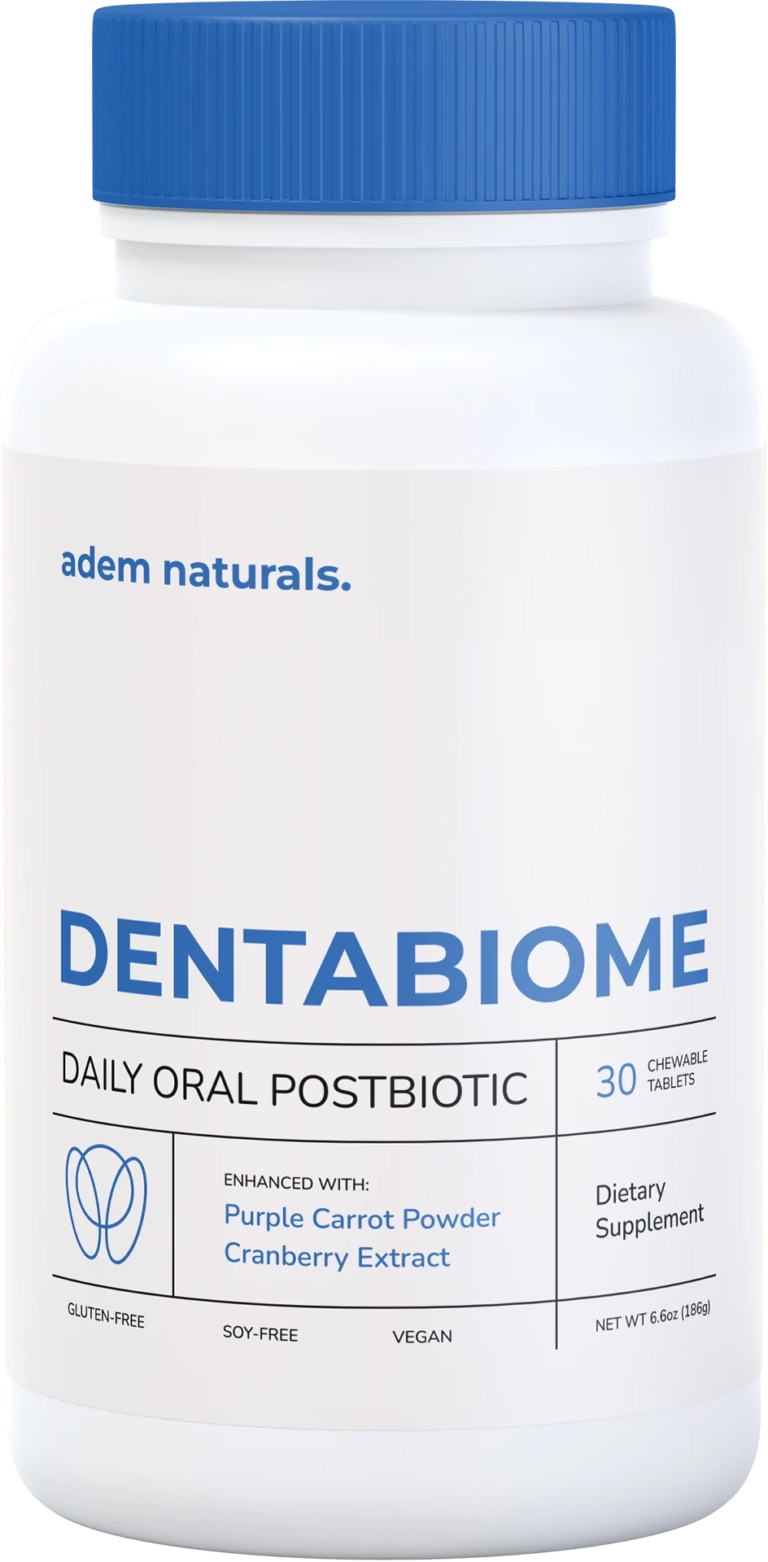
DentaBiome reviewDentaBiome is a once-daily chewable from Adem Naturals combining inactivated Lactobacillus strains, xylitol, cranberry and purple carrot. Th...
Reader reviews
No reader reviews yet. If you have tried Lactobacillus Salivarius, you can be the first to share how it went.
Reader reviews are personal opinions from visitors. We do not verify purchases, and reviews are not medical advice. We publish positive and negative reviews alike; see our review guidelines.
Write a review
Sources
- Lactobacillus salivarius WB21–containing tablets for the treatment of oral malodor: a double-blind, randomized, placebo-controlled crossover trial. Oral Surg Oral Med Oral Pathol Oral Radiol, 2014
- Improvement of periodontal condition by probiotics with Lactobacillus salivarius WB21: a randomized, double-blind, placebo-controlled study. J Clin Periodontol, 2008
- Efficacy of probiotics in the management of halitosis: a systematic review and meta-analysis. BMJ Open, 2022
- Efficacy and safety of probiotic therapy for halitosis: a systematic review and meta-analysis of randomized controlled trials. J Breath Res, 2025