What we like
- Ingredients are mostly familiar food-based herbs
- Contains honey and thyme, which have some research for short-term cough
- Liquid format can be mixed into a drink
- Supplement facts and other ingredients are published on the sales page
Watch out for
- Single 550 mg proprietary blend; no individual ingredient amounts disclosed
- Honey amount is likely far below the doses used in cough studies
- Label states the safety of the product has not been determined, while the sales page claims no side effects
- Lung cleansing marketing has no scientific basis
- Refund terms conflict (180 days versus 90 days minus shipping) and dosing instructions differ between label and FAQ
- Described as 100% plant-based despite containing honey
What is Breathe?
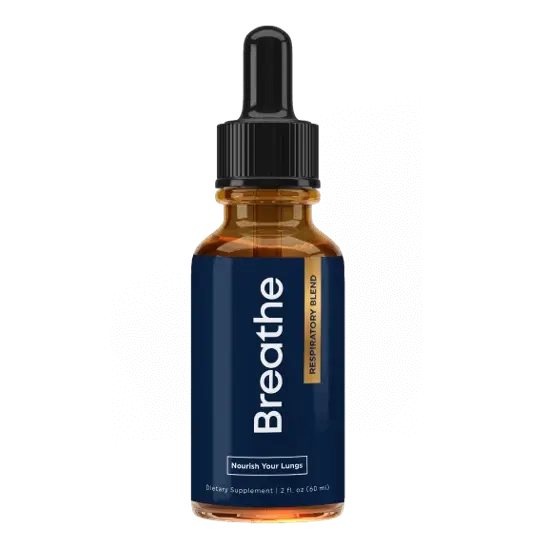
Breathe is a liquid herbal supplement sold online through the lungreset.com sales page and marketed as respiratory support. It comes in a 2 fl oz (60 mL) dropper bottle labeled “Respiratory Blend” and “Nourish Your Lungs”. The label lists Herbal Tea Therapy of Tallmadge, Ohio, as the distributor, and the brand says the product is made in the USA in an FDA-registered, GMP-certified facility.
The supplement facts panel lists a single 550 mg proprietary blend per 1 mL serving, containing lemon peel, peppermint leaf, ginger root, manuka honey, mullein leaf extract, thyme leaf, wild-crafted mullein leaf and microencapsulated peppermint oil. Other ingredients are water, glycerin, natural flavors and potassium sorbate. No individual ingredient amounts are disclosed, so there is no way to know how much honey, thyme or mullein you are getting.
Before going further, one point matters more than anything else in this review: shortness of breath, a persistent cough, wheezing, chest tightness or coughing up blood are symptoms that need a medical evaluation. A supplement is not a substitute for that visit.
How Breathe claims to work
The sales page presents Breathe with dramatic language about lung “cleansing” and clearing large amounts of mucus, says it has “no side effects”, and leans on an endorsement from a respiratory therapist along with customer stories about easier breathing. The brand also suggests that healthier lungs may bring more energy, better sleep and stronger immunity.
No published study has tested Breathe itself. There is also no scientific basis for the idea that a supplement “cleanses” the lungs. Healthy lungs clear themselves through mucus and tiny hair-like structures called cilia, and the most reliable ways to protect lung health are avoiding tobacco smoke and air pollution, staying active, keeping up with recommended vaccines and getting prompt care for breathing symptoms. The “no side effects” claim also conflicts with the product’s own label, which states that “the safety of this product has not been determined.”
Some ingredients in Breathe do have a traditional or modest research history related to the throat and occasional cough from a common cold. That is a much narrower and more cautious picture than the sales page paints.
What the ingredients actually do
Manuka honey
Honey is the ingredient with the best human evidence. A Cochrane review of six trials in children with acute cough, mostly from colds, found that honey probably relieves cough symptoms better than no treatment or placebo, while noting most children were treated for only one night. Those studies used honey by the spoonful, which is several grams per dose. In Breathe, manuka honey shares a 550 mg blend with seven other ingredients, so the amount per serving is a small fraction of what was studied. Manuka honey also has laboratory research on antibacterial activity, but test-tube results do not show what happens when small amounts are swallowed.
Thyme
Thyme is used in European herbal cough products. In a placebo-controlled trial of 361 adults with a short-term cough and mucus, a syrup combining thyme and ivy leaf extracts reduced coughing fits more than placebo over about 11 days, and a separate trial tested thyme combined with primrose root. These were standardized combination syrups taken at several milliliters three times a day, not thyme alone, so they say little about the unspecified amount of thyme leaf in Breathe.
Mullein
Mullein (Verbascum thapsus) has a long history in folk remedies for the throat and chest, and its leaves contain mucilage, a gel-like fiber that coats and soothes. A 2022 review described antioxidant, anti-inflammatory and antimicrobial activity in laboratory and animal studies, but controlled human trials are lacking. Its role in Breathe is traditional rather than evidence-based.
Peppermint, ginger and lemon peel
Peppermint leaf and oil give a cooling sensation from menthol, which can make breathing feel easier even though menthol does not change how the airways actually work. The National Center for Complementary and Integrative Health (NCCIH) notes peppermint oil is studied mainly for digestive complaints, and it can cause heartburn. Ginger is best studied for nausea, not breathing. Lemon peel contains flavonoids with antioxidant activity in laboratory studies, but there is no meaningful human evidence for respiratory benefits. These three mostly contribute flavor.
Overall, Breathe is a pleasant-tasting herbal blend whose best-supported ingredient, honey, is likely present in far smaller amounts than those used in research, and whose other ingredients rest on tradition and early laboratory work.
Who it may suit, and who should skip it
Breathe may appeal to healthy adults who enjoy herbal and honey flavors and want something soothing for the throat during cold season, and who understand that a spoonful of ordinary honey or a cup of warm tea offers a similar experience at a much lower cost. It is not a product for managing any diagnosed lung condition, and it should never replace inhalers or other prescribed treatments.
Skip it, or talk to your doctor first, if you:
- Have any ongoing breathing problem, a cough lasting more than a few weeks, shortness of breath, wheezing or chest pain. These need a medical evaluation.
- Take any prescription medication, including blood thinners, diabetes medications or sedatives, since herbal interactions have not been studied for this blend.
- Have diabetes, because the formula contains honey and glycerin.
- Have heartburn or reflux, which peppermint oil can worsen.
- Are pregnant or breastfeeding, as the label says the product’s safety has not been determined.
- Are buying for a child. The label advises keeping it away from children under 12, and honey should never be given to infants under 1 year old.
- Have allergies to plants in the mint, daisy or citrus families, or to honey.
The brand also describes every ingredient as “100% plant-based”, which is not accurate for a product that contains honey. Vegans should take note.
Price, guarantee and where to buy
On the official website, one bottle costs $69 plus $9.99 shipping. Three bottles cost $177 ($59 each) and six bottles cost $294 ($49 each), both with free shipping and digital bonus guides. The sales page also shows a post-purchase upsell offer for additional bottles.
The refund terms are inconsistent. Most of the page promotes a 180-day money-back guarantee, but one answer in the FAQ says you have 90 days to request a refund on your most recent order, minus shipping and handling. The page footer also names two different online retailers. Confirm the refund terms in writing before ordering, and keep your receipt.
Dosing instructions differ as well. The label says 1 mL once a day, with an optional second serving, while the FAQ says 2 to 3 mL or 1 to 3 drops, two to three times a day. Follow the label and ask your doctor if you are unsure. If you buy, purchase only from the official website.
Our verdict
Breathe combines familiar, mostly food-based herbs into a liquid drop, but nothing about it lives up to the lung “cleansing” message on its sales page. Its best-studied ingredient, honey, has moderate evidence for soothing a short-term cough, yet it sits in a tiny 550 mg blend with seven other ingredients and no disclosed doses. The label’s own warning that safety has not been determined, the “no side effects” and “plant-based” claims that do not match the product, and conflicting refund and dosing information all count against it. We rate Breathe 2.2 out of 5. If you have breathing symptoms, the most useful step is a visit to your doctor, not a supplement. You can read more about the evidence behind immune and seasonal wellness ingredients in our immune support hub.
Ingredients and the evidence behind them
| Ingredient | Amount | Why it’s included | Evidence |
|---|---|---|---|
| Manuka Honey | Undisclosed (part of 550 mg proprietary blend) | Throat-soothing ingredient with the best evidence in the blend | Moderate |
| Thyme | Undisclosed (thyme leaf, part of 550 mg proprietary blend) | Traditional cough herb | Limited |
| Mullein | Undisclosed (mullein leaf extract and wild-crafted mullein leaf, part of 550 mg proprietary blend) | Traditional throat and chest herb | Preliminary |
| Peppermint | Undisclosed (peppermint leaf and microencapsulated peppermint oil, part of 550 mg proprietary blend) | Cooling flavor from menthol | Limited |
| Ginger | Undisclosed (root, part of 550 mg proprietary blend) | Warming flavor and traditional herb | Limited |
| Lemon Peel | Undisclosed (part of 550 mg proprietary blend) | Flavor and source of citrus flavonoids | Preliminary |
Each ingredient links to its own page with the research, typical doses and safety notes.
Side effects and who should avoid it
The label itself states that the safety of this product has not been determined. Based on the ingredients, possible effects include heartburn or stomach upset (peppermint oil, ginger), mouth or throat irritation, and allergic reactions in people sensitive to honey, mint, citrus or daisy-family plants such as mullein. The honey and glycerin add a small amount of sugar and sugar alcohol, which matters for people with diabetes. Herbal interactions have not been studied for this blend, so talk to your doctor before use if you take blood thinners, diabetes medications, sedatives or any other prescription. Do not use it during pregnancy or breastfeeding without medical advice, do not give it to children under 12, and never give honey to infants under 1 year. Most importantly, do not use Breathe in place of medical care: shortness of breath, wheezing, chest pain, a cough lasting more than a few weeks or coughing up blood need prompt evaluation by a doctor.
FAQ
Can Breathe help with a lung condition?
No study has tested Breathe, and it is not intended to treat any disease. If you have a diagnosed lung condition or ongoing breathing symptoms, follow your doctor's treatment plan and do not replace prescribed medicines with a supplement.
What is in Breathe?
Each 1 mL serving contains a 550 mg proprietary blend of lemon peel, peppermint leaf, ginger root, manuka honey, mullein leaf extract, thyme leaf, mullein leaf and microencapsulated peppermint oil, plus water, glycerin, natural flavors and potassium sorbate. Individual amounts are not disclosed.
Does honey really help with coughs?
A Cochrane review found that honey probably eases acute cough symptoms in children better than no treatment or placebo, mostly over a single night. The studies used spoonful amounts, far more than a 550 mg blend can contain.
Is Breathe safe?
The product label states that its safety has not been determined. Its ingredients are common foods and herbs, but people with allergies, reflux, diabetes, those taking medications, and pregnant or breastfeeding women should talk to a doctor first.
How long is the guarantee?
The sales page mostly advertises a 180-day money-back guarantee, but its FAQ also mentions 90 days minus shipping and handling. Confirm the terms with customer support before ordering.
When should I see a doctor about breathing problems?
See a doctor for shortness of breath, wheezing, chest tightness or pain, a cough lasting more than three weeks, fever with cough, or coughing up blood. Call emergency services for severe difficulty breathing or bluish lips.
Reader reviews
No reader reviews yet. If you have tried Breathe, you can be the first to share how it went.
Reader reviews are personal opinions from visitors. We do not verify purchases, and reviews are not medical advice. We publish positive and negative reviews alike; see our review guidelines.
Write a review
Sources
- Official Breathe website. Product details, label and pricing
- Honey for acute cough in children. Cochrane Database Syst Rev, 2018
- Efficacy and tolerability of a fluid extract combination of thyme herb and ivy leaves and matched placebo in adults suffering from acute bronchitis with productive cough. A prospective, double-blind, placebo-controlled clinical trial. Arzneimittelforschung, 2006
- Evaluation of efficacy and tolerability of a fixed combination of dry extracts of thyme herb and primrose root in adults suffering from acute bronchitis with productive cough. A prospective, double-blind, placebo-controlled multicentre clinical trial. Arzneimittelforschung, 2007
- Health-promoting and disease-mitigating potential of Verbascum thapsus L. (common mullein): A review. Phytother Res, 2022