What is chlorogenic acid?
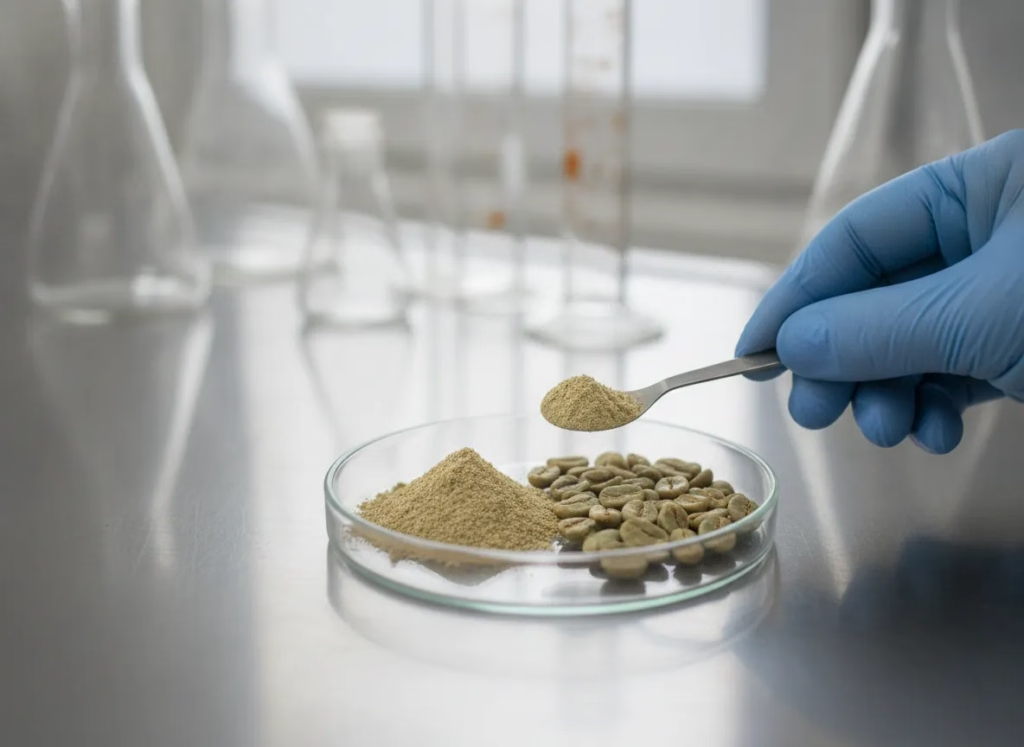
Chlorogenic acid is a polyphenol found in many plants, but it is especially concentrated in unroasted (green) coffee beans. Roasting breaks much of it down, which is why weight-loss supplements use green coffee bean extract as their source. Green coffee extracts also naturally contain caffeine unless they are decaffeinated.
What the research says
The NIH Office of Dietary Supplements explains that green coffee extract, probably because of its chlorogenic acid, inhibits fat accumulation in mice and may modulate glucose metabolism. In humans, however, it notes that only a few clinical trials have tested green coffee for weight loss, and all were of poor methodological quality. One meta-analysis of three trials using 180 to 200 mg a day of extract found a moderate average weight loss compared with placebo, but the reviewers flagged the low quality of every included study. ODS adds that another small trial claiming a benefit was strongly criticized.
A more recent 2023 meta-analysis of three randomized trials with 103 participants found that green coffee extract providing at least 500 mg a day of chlorogenic acid was associated with about 1.3 kg more weight loss than control. The authors themselves noted the small sample size and short duration and called for larger, longer trials.
Overall, the evidence suggests chlorogenic acid might have a small effect on weight, but the trials are too few and too weak to rely on.
How it’s used in supplements
Green coffee bean extract is usually standardized to a stated percentage of chlorogenic acids. In multi-ingredient liver or weight blends, the chlorogenic acid content is rarely disclosed, so it is unclear whether a product delivers anything close to 500 mg a day.
Green coffee beans naturally contain caffeine, as ODS notes, so non-decaffeinated extracts can cause typical caffeine effects such as jitteriness and trouble sleeping, particularly when combined with coffee, tea or other stimulant-containing products. People sensitive to caffeine, those with heart rhythm problems or high blood pressure, and anyone pregnant or breastfeeding should be cautious and speak with a doctor.
Bottom line: chlorogenic acid from green coffee has a plausible mechanism and a few positive trials, but the human evidence is small, short and of mixed quality. A possible weight difference of a kilogram or so over several weeks is the most that current studies suggest, and only at doses that may be much higher than those in multi-ingredient blends. It is not a reliable fat burner, and caffeine content should be considered when combining it with coffee or other stimulants.
Chlorogenic acid in coffee vs green coffee extract
You already get chlorogenic acid from coffee, but the amount varies a lot. A study of 104 espressos bought in coffee shops in Scotland, Italy and Spain found 6 to 188 mg of caffeoylquinic acids (the main chlorogenic acids) per serving. Darker roasting destroyed more of them, while caffeine stayed stable (Ludwig et al., 2014). The International Society of Sports Nutrition puts a typical cup of brewed or instant coffee at roughly 100 to 400 mg of chlorogenic acids (ISSN position stand, 2023).
Green coffee bean extract is made from unroasted beans, so it keeps more chlorogenic acid per gram, and it is usually standardized to a stated percentage. The practical difference is that coffee also delivers a predictable dose of caffeine, while an extract can be regular or decaffeinated. Decaffeination itself removes little chlorogenic acid (Honda et al., 2022). For more on the extract form, see our green coffee bean extract page.
How much chlorogenic acid per day?
There is no official recommended intake. Doses in weight studies fall into two groups:
- 180 to 200 mg of green coffee extract per day in the three trials pooled by a 2011 meta-analysis. They showed an average 2.47 kg greater weight loss than placebo, but every trial had a high risk of bias and results varied widely (Onakpoya et al., 2011).
- At least 500 mg per day in the 2023 meta-analysis of three trials (103 people), which found about 1.3 kg more weight loss than control over short periods (Kanchanasurakit et al., 2023).
Several cups of coffee can supply a similar amount of chlorogenic acid. Check how much caffeine your extract adds on top of your usual coffee and tea.
Chlorogenic acid and blood pressure
Blood pressure is the other outcome often linked to chlorogenic acid. A 2024 meta-analysis of 10 randomized trials with 563 adults found green coffee bean extract was associated with about 3 mmHg lower systolic and 2 mmHg lower diastolic pressure, with larger changes in people who started with high blood pressure and no change in heart rate. The authors found no clear dose-response pattern (Samavat et al., 2024). These are small changes from short studies, and an extract is not a substitute for blood pressure care. If you take blood pressure medicine, talk to your doctor before adding any coffee-based supplement. Diet and activity remain the base of heart and circulation health and weight management; see also weight-loss plateaus.
Frequently asked questions
What are the benefits of chlorogenic acid?
Chlorogenic acid is a polyphenol found mainly in coffee. Small trials of green coffee extract have linked it to slightly lower body weight and blood pressure, but most studies are short, small and of mixed quality. It is best viewed as a minor dietary compound, not a proven treatment for any condition. Talk to your doctor before using it, especially if you take medicine.
Does chlorogenic acid help with weight loss?
Possibly a little, but the evidence is weak. A 2023 meta-analysis of three trials with 103 people found about 1.3 kg more weight loss with green coffee extract providing at least 500 mg a day. An earlier review found larger effects but rated every trial at high risk of bias. Diet and activity matter far more than this supplement.
How much chlorogenic acid is in a cup of coffee?
It varies widely with the bean, roast and serving size. One study of 104 coffee-shop espressos measured 6 to 188 mg per serving, and the International Society of Sports Nutrition estimates roughly 100 to 400 mg per typical cup. Darker roasts contain less, because roasting breaks chlorogenic acid down while caffeine stays stable.
Is green coffee extract better than drinking coffee for chlorogenic acid?
Green coffee extract comes from unroasted beans, so it contains more chlorogenic acid per gram and is often standardized. Coffee still supplies a meaningful amount, roughly 100 to 400 mg per cup by one estimate. No good trials compare the two directly for weight. Extracts may also contain caffeine, which adds to what you get from coffee.
How much chlorogenic acid should I take per day?
There is no official dose. Weight trials used either 180 to 200 mg of green coffee extract per day or extract providing at least 500 mg per day, usually for 12 weeks or less. Long-term safety at these doses is not well studied. Check the caffeine content and talk to your doctor before starting, especially if you have heart or blood pressure problems.
What are the side effects of chlorogenic acid?
Most side effects come from the caffeine in non-decaffeinated green coffee extracts: jitteriness, a fast heartbeat, headaches and trouble sleeping. People who are pregnant or breastfeeding, sensitive to caffeine, or living with heart rhythm problems or high blood pressure should be cautious. Talk to your doctor before combining it with other stimulants or medicines.
Safety and cautions
Green coffee extracts contain caffeine unless decaffeinated, which can cause jitteriness and sleep problems. Use caution with high blood pressure, heart rhythm problems, pregnancy and breastfeeding, and talk to your doctor.
Supplements we reviewed that contain it
★★★☆☆
HepatoBurn reviewHepatoBurn is a liver-focused weight supplement with ten ingredients, including berberine, milk thistle and green tea. A few have modest evi...
★★★☆☆
Liv Pure reviewLiv Pure is a liver-themed capsule for weight management that names ten ingredients, including milk thistle, berberine and green tea, but di...
★★☆☆☆
Metabo Drops reviewMetabo Drops is a liquid coffee additive that lists chlorogenic acid, green tea, chromium, L-carnitine and L-theanine but does not disclose ...
Reader reviews
No reader reviews yet. If you have tried Chlorogenic acid, you can be the first to share how it went.
Reader reviews are personal opinions from visitors. We do not verify purchases, and reviews are not medical advice. We publish positive and negative reviews alike; see our review guidelines.
Write a review
Sources
- Dietary Supplements for Weight Loss Fact Sheet for Health Professionals. NIH Office of Dietary Supplements
- Chlorogenic acid in green bean coffee on body weight: a systematic review and meta-analysis of randomized controlled trials. Syst Rev, 2023
- Variations in caffeine and chlorogenic acid contents of coffees: what are we drinking?. Food Funct, 2014
- International society of sports nutrition position stand: coffee and sports performance. J Int Soc Sports Nutr, 2023
- Effect of Roasting Degree on Major Coffee Compounds: A Comparative Study between Coffee Beans with and without Supercritical CO(2) Decaffeination Treatment. J Oleo Sci, 2022
- The use of green coffee extract as a weight loss supplement: a systematic review and meta-analysis of randomised clinical trials. Gastroenterol Res Pract, 2011
- The effects of green coffee bean extract on blood pressure and heart rate: A systematic review and dose-response meta-analysis of randomized controlled trials. Diabetes Metab Syndr, 2024