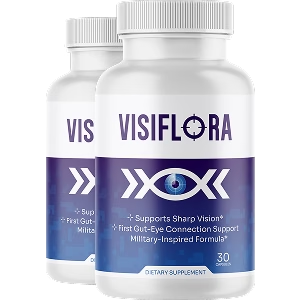
What we like
- Names every ingredient, including lutein, zeaxanthin, bilberry, saffron and astaxanthin
- One capsule a day is easy to take
- Site states non-GMO and stimulant-free, with no auto-ship subscription
- 60-day money-back guarantee
Watch out for
- Only the zinc dose (11 mg) is disclosed; no Supplement Facts panel found on the sales, affiliate or help pages
- More than 20 ingredients in a single capsule suggests many are present in small amounts
- Marketed around a gut-eye connection, yet contains no probiotics, prebiotic fiber or digestive ingredients
- Affiliate emails use fear-based, unsupported claims about gut toxins, floaters and blindness
- No single-bottle option, and refunds are minus shipping with return postage at the buyer's cost
- Ginkgo, Coleus forskohlii, chromium and alpha lipoic acid raise medication interaction questions
What is VisiFlora?
VisiFlora is a capsule supplement sold online as “precision vision support that starts in the gut.” The sales page calls it a “22-in-1 vision-essential formula” that combines eye nutrients with ingredients meant to support the so-called gut-eye connection. The bottle shown on the site holds 30 capsules, and the FAQ says to take one capsule a day with a meal, so one bottle is a 30-day supply. Orders are processed by ClickBank, and returns go to a warehouse in Aurora, Colorado. The site does not name a manufacturer or say where the product is made, stating only that ingredients are handled “in a certified facility.”
The page says VisiFlora is non-GMO, stimulant-free and vegetarian-friendly. We analyzed the sales page, the refund and reference pages, the affiliate materials and the published research on the named ingredients. We could not find a Supplement Facts panel on any of these pages, and the product image downloads on the affiliate page were broken, so we could not confirm the full label. We did not test the product on people.
How VisiFlora claims to work
The brand groups its ingredients into four blends. The “Vision Defense Matrix” lists astaxanthin, vitamins C and E, copper, selenium and chromium. The “Gut-Eye Barrier Complex” lists grape seed extract, rutin, quercetin, taurine and alpha lipoic acid. “Vision Performance Boosters” are ginkgo biloba, Coleus forskohlii and eyebright. The “Macular and Lens Protection Blend” includes vitamin A (as beta-carotene), lutein and zeaxanthin, zinc, bilberry, lycopene and saffron. Counting them, we found 21 named ingredients, not 22.
The company says the formula is “based on modern research exploring the gut-eye connection” and promises daily eye comfort, visual clarity and support for “nutrient absorption throughout the body.” The gut-retina axis is a real research topic. Scientists are studying how gut bacteria may relate to eye conditions such as diabetic retinopathy, mostly in animals and observational studies. But that research is early, and it does not show that any supplement improves vision by acting on the gut. Notably, VisiFlora contains no probiotics, prebiotic fibers or digestive enzymes. Its “gut-eye” ingredients are flavonoids, an amino acid and an antioxidant that are not specific to the gut.
The affiliate page goes much further. Its ready-made emails describe a “12-second eye detox ritual,” claim a gut toxin “eats your retina away,” call yellow eye discharge “a 90% sign” of that toxin, and say the method is “5X more effective than anything your eye doctor prescribes.” None of these claims is supported by evidence, and the emails lean on fear of blindness. Any ad for VisiFlora that uses this language should be treated with caution.
What the ingredients actually do
The biggest limit to judging VisiFlora is that, apart from zinc (11 mg), the sales page gives no amounts. Twenty or more ingredients share one daily capsule, which means many of them are likely present in small amounts compared with doses used in studies. Here is what the research says about the most important ones.
Lutein and zeaxanthin
These carotenoids make up the macular pigment. In the AREDS2 trial, adding 10 mg lutein and 2 mg zeaxanthin to the AREDS formula did not significantly slow progression to advanced AMD in the primary analysis, but became the recommended replacement for beta-carotene. Smaller trials show they raise macular pigment and may modestly improve contrast sensitivity. Without stated amounts, we cannot tell whether VisiFlora provides useful doses.
Bilberry and saffron
A randomized trial found 480 mg per day of bilberry extract eased some measures of screen-related eye fatigue, and a trial in people with AMD found 20 mg per day of saffron modestly improved visual function. These are among the better studied herbs for eyes, but both doses are large relative to a single capsule shared with 19 other ingredients. NCCIH notes bilberry has not been clearly shown to help any health condition.
Astaxanthin
A randomized trial in children with heavy screen use found 4 mg per day of astaxanthin improved eye strain scores; it was funded by the ingredient maker. The VisiFlora dose is not disclosed.
Taurine, quercetin, grape seed and alpha lipoic acid
Taurine is the most abundant amino acid in the retina, and animal research shows deficiency damages photoreceptors, but there is little human evidence that extra taurine improves vision in people who eat a normal diet. Quercetin and grape seed extract are flavonoid antioxidants with no direct human evidence for eye health. Alpha lipoic acid is studied mainly for diabetic nerve pain, not vision.
Ginkgo, eyebright and Coleus forskohlii
A Cochrane review found too little evidence to say whether ginkgo helps AMD. Eyebright has a long folk history for eye complaints, but the research consists of cell studies, often of eye drops rather than oral capsules. Coleus forskohlii is more often marketed for weight loss; in mice, its extract induced liver enzymes that process many drugs, which raises interaction questions.
Vitamins and minerals
Zinc (11 mg) is close to a normal daily intake and far below the 80 mg in AREDS 2. Vitamins A, C and E, copper and selenium support normal eye function, but extra amounts are unlikely to help people who are not deficient. Chromium, a mineral mainly marketed for blood sugar, has no established role in vision.
Who it may suit, and who should skip it
VisiFlora may appeal to adults who want a broad, one-capsule antioxidant blend and who understand it is general nutrition rather than a vision treatment. Because the doses are hidden, it is hard to recommend over a fully labeled eye formula, especially for anyone who wants lutein, zeaxanthin, bilberry or saffron at research-matched amounts.
It is not a substitute for an eye exam or medical care. Floaters, flashes, night vision problems, eye discharge or blurry vision can signal conditions that need prompt attention, and people with diagnosed AMD should ask their eye doctor about a true AREDS 2 formula.
Talk to your doctor first, or skip it, if you take blood thinners or antiplatelet drugs (ginkgo and other ingredients may increase bleeding risk), take diabetes medicines (chromium and alpha lipoic acid may affect blood sugar), take blood pressure medicines or many other prescriptions (Coleus forskohlii may affect drug metabolism), take sedatives, are pregnant or breastfeeding, or have kidney or liver disease. Smokers should note the formula lists beta-carotene, which in high doses has been linked to lung cancer in smokers; the dose here is not disclosed.
Price, guarantee and where to buy
The official site does not offer a single bottle. Two bottles cost $158 ($79 each) plus a shipping fee, three bottles cost $177 ($59 each) and six bottles cost $294 ($49 each); the larger packages include free US shipping and three digital ebooks. The site says there is no subscription or auto-ship. VisiFlora comes with a 60-day money-back guarantee, but the refund policy says refunds are issued minus shipping fees, return shipping is at your cost, and all bottles must be sent back to the Colorado warehouse. Buy only from the official site and read the refund terms before choosing a package.
Our verdict
VisiFlora names several reasonable eye ingredients, including lutein, zeaxanthin, bilberry, saffron and astaxanthin, but it hides nearly every dose, squeezes more than 20 ingredients into a single capsule and wraps them in a “gut-eye” story that the formula itself does not really reflect. The affiliate materials rely on fear-based claims about gut toxins and blindness. The 60-day refund is shorter and less generous than many competitors, and you need to buy at least two bottles. We rate it 2.4 out of 5: plausible ingredients, but too little transparency and too much hype to recommend over a clearly labeled eye supplement.
Ingredients and the evidence behind them
| Ingredient | Amount | Why it’s included | Evidence |
|---|---|---|---|
| Lutein | Undisclosed (part of the Macular and Lens Protection Blend; listed as from marigold) | Macular carotenoid the brand says helps filter blue light and support visual sharpness | Moderate |
| Zeaxanthin | Undisclosed (part of the Macular and Lens Protection Blend; listed as from marigold) | Macular carotenoid paired with lutein | Moderate |
| Taurine | Undisclosed (part of the Gut-Eye Barrier Complex) | Amino acid the brand says supports cellular hydration and retinal function | Preliminary |
| Eyebright | Undisclosed (part of the Vision Performance Boosters blend) | Traditional herb the brand says promotes ocular comfort and clarity | Preliminary |
| Quercetin | Undisclosed (part of the Gut-Eye Barrier Complex, with rutin and grape seed extract) | Bioflavonoid the brand says supports cellular integrity and vascular health around the eyes | Preliminary |
| Zinc | 11 mg per capsule (the only dose stated on the sales page) | Mineral the brand says supports retinal enzyme activity; well below the 80 mg in AREDS 2 | Moderate |
| Bilberry extract | Undisclosed | Anthocyanin-rich berry the brand links to night vision and eye resilience | Limited |
| Saffron extract | Undisclosed | Botanical the brand says supports visual acuity | Limited |
| Astaxanthin | Undisclosed | Carotenoid antioxidant marketed for retinal health and oxidative stress | Limited |
| Ginkgo biloba | Undisclosed | Botanical marketed for microcirculation and visual focus | Preliminary |
| Alpha lipoic acid | Undisclosed | Antioxidant the brand says regenerates other nutrients; studied mainly for diabetic nerve pain | Limited |
| Grape seed extract | Undisclosed | Bioflavonoid source for vascular support; no direct evidence for eyes | Limited |
Each ingredient links to its own page with the research, typical doses and safety notes.
Side effects and who should avoid it
There are no published safety studies on VisiFlora itself, and because doses are undisclosed, it is hard to predict effects. Based on the named ingredients, possible side effects include stomach upset, nausea, headache or dizziness. Ginkgo may increase bleeding risk with warfarin, aspirin, clopidogrel and similar drugs. Chromium and alpha lipoic acid may lower blood sugar, which matters for people on insulin or other diabetes medicines. Coleus forskohlii extract induced drug-metabolizing liver enzymes in mice, so it could change how other medicines work. Quercetin can alter the absorption of some drugs, and its long-term safety at high doses is not established. Beta-carotene supplements have been linked to higher lung cancer risk in smokers. Pregnant or breastfeeding women should avoid it unless a doctor approves. Stop use and see a doctor if you notice unusual bruising, signs of low blood sugar or any change in vision.
FAQ
Does VisiFlora contain probiotics?
Not according to the ingredient list on the official sales page. Despite the gut-eye marketing, its "Gut-Eye Barrier Complex" contains grape seed extract, rutin, quercetin, taurine and alpha lipoic acid, none of which are probiotics or prebiotic fibers.
How much of each ingredient is in VisiFlora?
The sales page gives only one amount, 11 mg of zinc. We could not find a Supplement Facts panel on the sales, affiliate or help pages, so the other doses are unknown. Ask the company for the full label before buying.
Can VisiFlora clear floaters or restore vision?
There is no evidence that it can. Affiliate emails make claims about flushing eye toxins and clearing floaters, but these are not supported by research. New floaters or flashes can signal a retinal problem and need prompt eye care.
Is the gut-eye connection real?
Researchers are studying links between gut bacteria and eye conditions such as diabetic retinopathy, but the work is early and mostly in animals and observational studies. It does not show that any supplement improves eyesight through the gut.
What is the refund policy?
VisiFlora offers a 60-day money-back guarantee. The refund policy says you must return all bottles to the company's Colorado warehouse at your own cost, and refunds are issued minus shipping fees.
Sources
- Official VisiFlora website. Product details, label and pricing
- Lutein + zeaxanthin and omega-3 fatty acids for age-related macular degeneration: the Age-Related Eye Disease Study 2 (AREDS2) randomized clinical trial. JAMA, 2013
- Effect of Antioxidant Supplementation on Macular Pigment Optical Density and Visual Functions: A Systematic Review and Network Meta-Analysis of Randomized Controlled Trials. Adv Nutr, 2024
- Saffron therapy for the treatment of mild/moderate age-related macular degeneration: a randomised clinical trial. Graefes Arch Clin Exp Ophthalmol, 2019
- Astaxanthin (AstaReal(®)) Improved Acute and Chronic Digital Eye Strain in Children: A Randomized Double-Blind Placebo-Controlled Trial. Adv Ther, 2025