What is passionflower?
Passionflower (Passiflora incarnata) is a climbing vine native to the southeastern United States and Central and South America, with distinctive white and purple flowers. According to NCCIH, it was traditionally used as a sedative; Spanish explorers learned of it in South America and brought it to Europe, where it entered folk medicine. Today the leaves, stems and flowers (the aerial parts) are dried for teas or made into extracts and capsules.
Passionflower contains flavonoids and other plant compounds. Researchers believe some of these act on the GABA system, the brain’s main calming signaling pathway, which may explain its traditional reputation as a relaxing herb.
What the research says
Passionflower has more human research than most calming herbs, though the studies are small. A 2020 systematic review in Nutrients included nine randomized clinical trials in adults lasting from one day to 30 days. Most reported lower anxiety levels after passionflower preparations, with the effect less evident in people with mild symptoms, and no serious adverse effects such as memory problems were observed.
For sleep, a 2011 double-blind crossover study of 41 healthy young adults found that one cup of passionflower tea each evening for a week improved self-rated sleep quality compared with placebo tea. A 2024 randomized, placebo-controlled trial of 65 adults with stress and sleep problems reported that a standardized passionflower extract taken at bedtime for 30 days reduced perceived stress scores and increased total sleep time compared with placebo. That trial was conducted with a commercial extract and authors declared financial relationships, so independent replication would strengthen the findings.
NCCIH sums up the evidence this way: a small amount of research suggests oral passionflower might help reduce symptoms of anxiety, including anxiety before surgery or dental procedures, and might improve total sleep time in adults with insomnia, but conclusions are not definite. There is not enough evidence to say whether it helps with other uses, such as stress, fibromyalgia or pain. Passionflower has not been studied as a treatment for nerve conditions.
How it’s used in supplements
Passionflower appears in teas, tinctures, single-herb capsules and relaxation or sleep blends, often alongside lemon balm, valerian, chamomile or California poppy. It is commonly taken in the evening. NCCIH notes it is likely safe as a food flavoring, may be safe as a tea for up to 7 nights, and daily extract use may be safe for up to 8 weeks.
Possible side effects include drowsiness, dizziness and confusion. Because it may slow the nervous system, it should not be combined with sedatives, alcohol or anesthesia; NCCIH advises talking to your health care provider if you take passionflower within 2 weeks of a scheduled surgery. It should not be used during pregnancy because it may induce uterine contractions, and little is known about its safety during breastfeeding. If you take any prescription medicine, talk with your doctor before using it.
Safety and cautions
May cause drowsiness, dizziness or confusion. Avoid with sedatives, sleep medicines and alcohol, and stop at least 2 weeks before surgery. Do not use during pregnancy; safety in breastfeeding is unknown. Talk to your doctor if you take any prescription medicine.
Supplements we reviewed that contain it
★★★☆☆
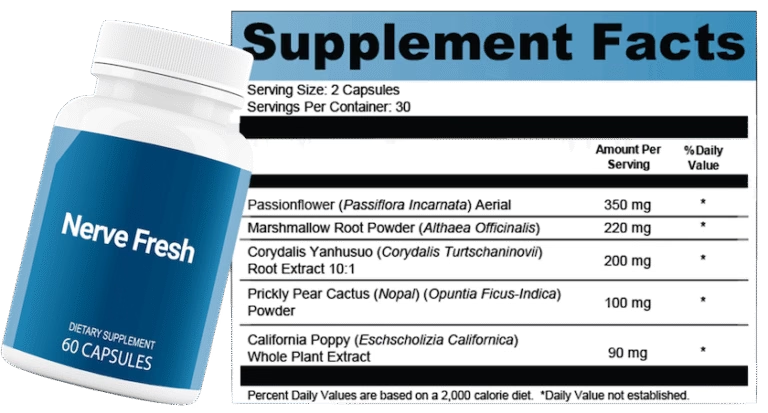
Nerve Fresh reviewNerve Fresh is a fully disclosed capsule of passionflower, marshmallow root, corydalis, prickly pear and California poppy for everyday nerve...
Reader reviews
No reader reviews yet. If you have tried Passionflower, you can be the first to share how it went.
Reader reviews are personal opinions from visitors. We do not verify purchases, and reviews are not medical advice. We publish positive and negative reviews alike; see our review guidelines.
Write a review
Sources
- Passionflower. NCCIH
- Passiflora incarnata in Neuropsychiatric Disorders-A Systematic Review. Nutrients, 2020
- A double-blind, placebo-controlled investigation of the effects of Passiflora incarnata (passionflower) herbal tea on subjective sleep quality. Phytother Res, 2011
- Randomized, Double-Blind, Placebo-Controlled, Clinical Study of Passiflora incarnata in Participants With Stress and Sleep Problems. Cureus, 2024