What is marshmallow root?
Marshmallow (Althaea officinalis) is a perennial plant that grows in damp, marshy areas of Europe, western Asia and North Africa. Its root has been used in traditional herbal medicine for centuries, and it gave its name to the confection, which was once made from the root’s sap. Modern marshmallow candy no longer contains it.
The root is rich in mucilage, a polysaccharide fiber that forms a soothing gel when mixed with water. According to LactMed, this mucilage is made of sugars such as L-rhamnose, D-galactose and galacturonic acid. The gel is thought to coat and soothe mucous membranes in the mouth, throat and digestive tract.
What the research says
Most research focuses on cough and the throat. A 2020 review in Complementary Medicine Research concluded that animal and clinical studies support marshmallow extracts for dry cough, and that combinations with other herbs such as ivy, ginger or thyme may improve results. The review was written by an author affiliated with an herbal pharmaceutical company, and many of the underlying studies were small.
Marshmallow is also promoted to support milk supply during breastfeeding, but LactMed notes no scientifically valid clinical trials support that use. There are no human studies of marshmallow root for nerve health, inflammation markers or nerve comfort, so its role in nerve-focused formulas rests on its traditional reputation as a soothing herb. Overall, its evidence is limited outside of cough and sore throat.
In nerve and comfort formulas, marshmallow root is best understood as a gentle supporting botanical. It brings a long record of traditional use and a good tolerability profile rather than a specific, research-backed effect, and its amount in a capsule is far smaller than what is typically used in a tea or syrup. If your main interest is its soothing effect on the throat or digestion, a tea or lozenge is the more traditional way to use it.
How it’s used in supplements
Marshmallow root is used in teas, syrups, lozenges and capsules, mostly in throat, cough and digestive comfort products. LactMed reports it is generally well tolerated in adults, with allergic reactions reported rarely, and that the FDA considers it generally recognized as safe in amounts found in foods.
Because the mucilage forms a gel in the digestive tract, a sensible precaution, as with other gel-forming fibers, is to take it a little apart from other medicines. During pregnancy, ask your doctor before using concentrated forms.
Safety and cautions
Generally well tolerated; rare allergic reactions. As with other gel-forming fibers, consider spacing it apart from other medicines. Check with your doctor if you are pregnant.
Supplements we reviewed that contain it
★★★☆☆
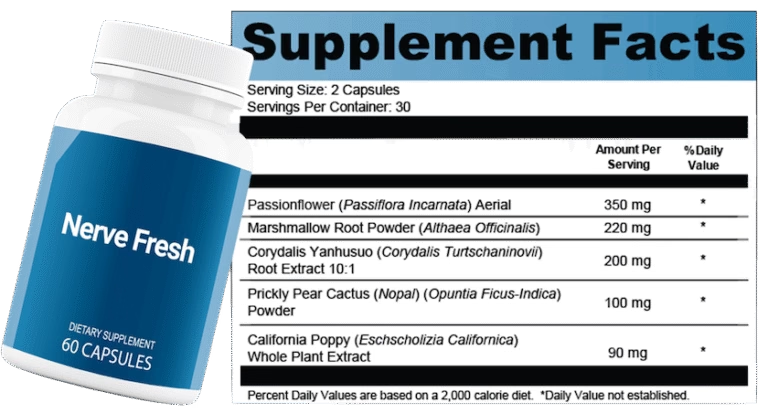
Nerve Fresh reviewNerve Fresh is a fully disclosed capsule of passionflower, marshmallow root, corydalis, prickly pear and California poppy for everyday nerve...
Reader reviews
No reader reviews yet. If you have tried Marshmallow Root, you can be the first to share how it went.
Reader reviews are personal opinions from visitors. We do not verify purchases, and reviews are not medical advice. We publish positive and negative reviews alike; see our review guidelines.
Write a review
Sources
- Marsh Mallow (Althaea officinalis L.) and Its Potency in the Treatment of Cough. Complement Med Res, 2020
- Marshmallow. , 2006