What is prickly pear?
Prickly pear is the common name for cacti of the Opuntia genus, especially Opuntia ficus-indica. Both parts of the plant are eaten: the flat green pads, called nopales or cladodes, are a staple vegetable in Mexican cooking, and the colorful fruit, called cactus pear or tuna, is eaten fresh or as juice. In supplements it appears as dried pad or fruit powder or as extracts.
The fruit is rich in betalains, the red and yellow pigments also found in beets, along with vitamin C and polyphenols. The pads are high in soluble fiber and mucilage.
What the research says
The clearest human study is on antioxidant status. In a 2004 randomized crossover study in the American Journal of Clinical Nutrition, 18 healthy volunteers ate 250 g of fresh cactus pear fruit pulp twice a day for two weeks, or took vitamin C. After the fruit, markers of oxidative damage to fats dropped substantially and antioxidant balance improved, while vitamin C at a comparable dose did not change those markers. The amounts were whole-food servings, far more than the milligram amounts in most capsules.
Prickly pear has also been studied for blood sugar, partly because of its fiber. A 2008 review of botanicals promoted for blood sugar, which included nopal, concluded there was not enough clinical evidence to recommend any of them for glucose control and called for well-designed trials. A 2020 systematic review of betalain-rich cacti found that animal studies suggested benefits for blood vessel function, but noted a severe lack of robust randomized human studies.
Overall, the evidence is limited. Prickly pear is a nutritious food with antioxidant compounds, but supplement-sized doses have not been shown to produce specific health effects, and it has not been studied for nerve health.
If you want the antioxidant and fiber benefits of prickly pear, the most reliable way is to eat it as a food: grilled or sauteed nopales, or fresh cactus pear fruit in season. Capsules offer convenience but much smaller amounts.
How it’s used in supplements
Prickly pear appears in blood sugar formulas, antioxidant blends, and some products marketed for comfort or for easing hangover symptoms. As a food it is very safe for most people. In larger amounts it may cause mild digestive effects such as bloating, diarrhea or nausea.
Because it has been studied for lowering blood sugar, people taking diabetes medicines should talk to their doctor before using concentrated prickly pear products and monitor their glucose. Safety of concentrated supplements in pregnancy and breastfeeding is not well established, so food amounts are the safer choice during those times.
Safety and cautions
Generally safe as a food; may cause mild digestive upset in larger amounts. May affect blood sugar, so talk to your doctor if you take diabetes medicines. Concentrated forms are not well studied in pregnancy or breastfeeding.
Supplements we reviewed that contain it
★★★☆☆
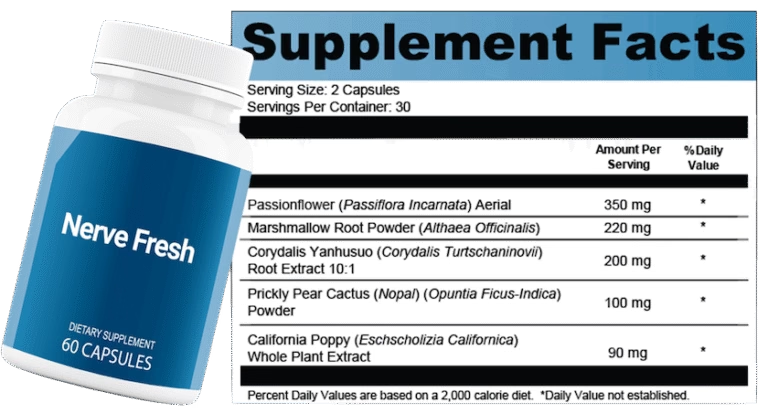
Nerve Fresh reviewNerve Fresh is a fully disclosed capsule of passionflower, marshmallow root, corydalis, prickly pear and California poppy for everyday nerve...
Reader reviews
No reader reviews yet. If you have tried Prickly Pear, you can be the first to share how it went.
Reader reviews are personal opinions from visitors. We do not verify purchases, and reviews are not medical advice. We publish positive and negative reviews alike; see our review guidelines.
Write a review
Sources
- Supplementation with cactus pear (Opuntia ficus-indica) fruit decreases oxidative stress in healthy humans: a comparative study with vitamin C. Am J Clin Nutr, 2004
- Efficacy of dietary supplementation with botanicals on carbohydrate metabolism in humans. Endocr Metab Immune Disord Drug Targets, 2008
- The effects of betalain-rich cacti (dragon fruit and cactus pear) on endothelial and vascular function: a systematic review of animal and human studies. Food Funct, 2020